


The Last Asco rolls into our editorial office with big promises. Despite its modern geometry and capable suspension, the motorless mountain bike aims to build on traditional values. For a long time, light weight was considered the core competence of trail bikes. In the bike test system, only the models that didn't go over the top on the scales were able to score points.
In the meantime, however, the virtue of a light trail bike weight seemed to have been forgotten. Massive constructions, high pivots and enduro ambitions are still in vogue. Last has dispensed with intricate designs and thick parts on its Asco trail bike. Instead, there are straight lines, a carbon frame manufactured in Germany and a lightweight equipment package.
We wanted to find out whether it could still impress in tough terrain over the long term and chased the Last Asco over tough trails and even a World Cup downhill course for a year. Here is our final report.
Last Asco in the endurance test: Details
Profile Last Asco
- Area of application: Trail
- Suspension travel: 140 / 130 mm
- Wheel size: 29"
- Frame material: Carbon (Featherlight layup)
- Maximum permissible system weight: 110 kg
- Frame weight: 1942 g (BIKE measurement, without shock, size 190)
- Weight of complete bike: 12.43 kg (pre-configured complete bike) / 12.44 kg (BIKE conversion)
- Price: 6499 euros (pre-configured complete bike) / approx. 9000 euros (BIKE conversion)
- Special features: Frame made in Germany, Flex-Pivot, Tool-Mount
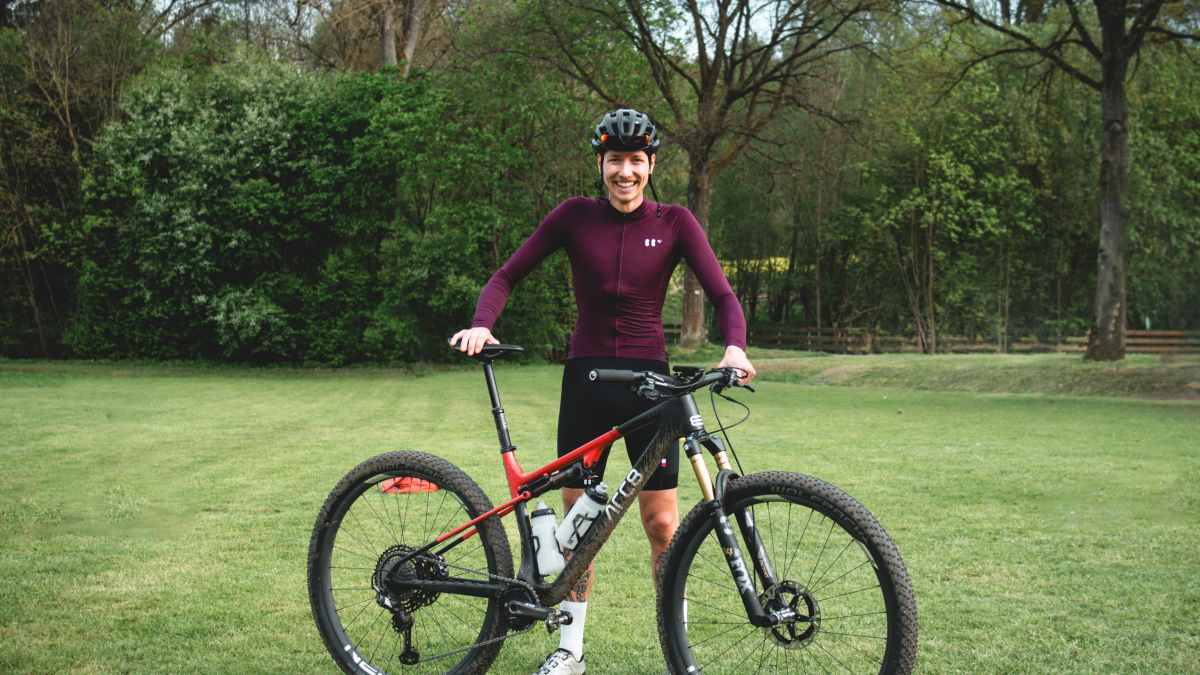
Profile test driver
- Name: Jan Timmermann
- Profession: BIKE editor
- Size: 190 cm
- Weight: 82 kg
- Place of residence: Upper Bavaria
- Preferred riding style: long tours with a high proportion of trails, playful riding manoeuvres
Equipment of the test bike
At the start of the endurance test in April 2025, our test bike had the cheapest pre-configured spec and cost € 6499. Over the course of the test period, the bike served as a parts carrier for the new Shimano XTR groupset including Di2 wireless drivetrain, four-piston brakes and crank as well as carbon wheelset from the XTR Enduro segment. It also received new Continental tyres, a longer wireless seatpost and a slightly narrower and shorter cockpit to better suit the ergonomic needs of our test rider. The following parts list shows the modifications in brackets:

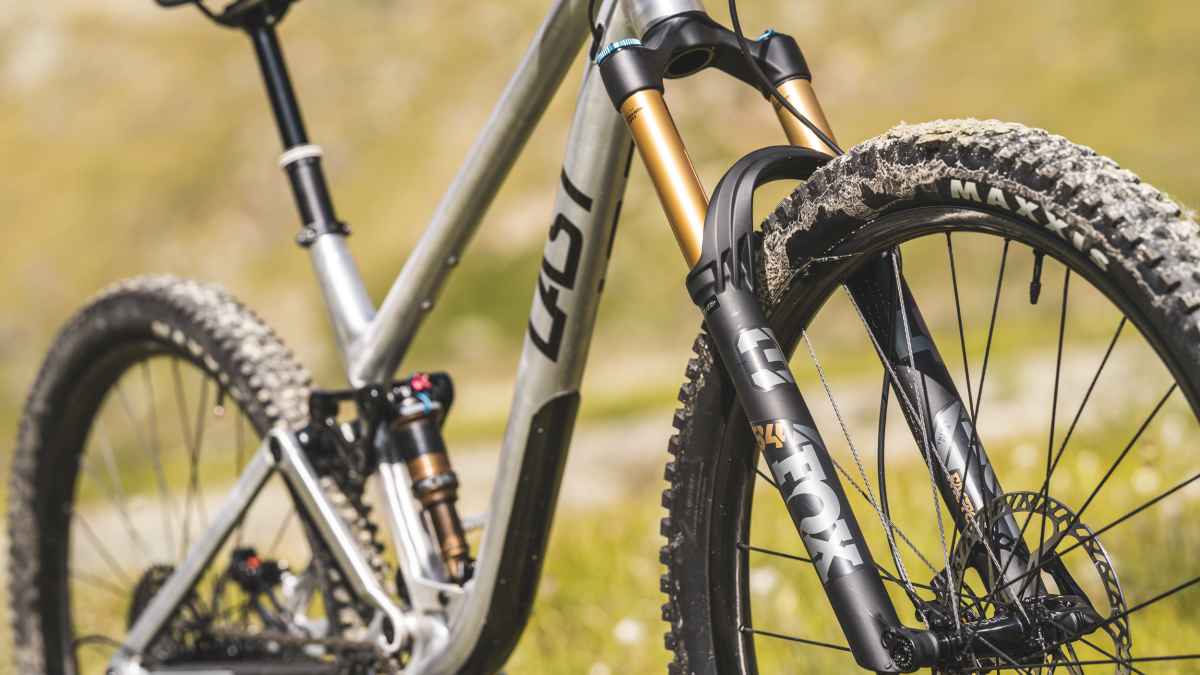
- Fork: Rockshox Pike Select +
- Shock: Rockshox Deluxe Ultimate
- Gearing: Sram GX Eagle 1 x 12 / 32; 10-52 (Shimano XTR Di2 1 x 12 / 30; 9-45)
- Brakes: Formula Cura 4, 203 / 203 mm (Shimano XTR 4-piston, 203 / 180 mm)
- Seatpost / Stroke: Bikeyoke Divine, 185 mm (Rockshox Reverb AXS, 200 mm)
- Saddle: Ergon SM Enduro Comp Men (Selle Italia SLT Ti)
- Wheels: Newmen Beskar 30 Base Fade (Shimano XTR Enduro)
- Tyres: Maxxis DHF / Forekaster 3C MaxxTerra Exo TR, 29 x 2.50 WT / 29 x 2.40 (Continental Magnotal / Dubnital)
- Stem: Newmen Evolution SL, 50 mm (Hope AM, 35 mm)
- Handlebars: Newmen Advanced, 25 x 800 mm (Hope Carbon, 760 mm)
- Grips: Ergon GE1 Slim (ODI Longneck)
- Headset: Cane Creek Forty
Highlights in the endurance test
Alpine tours
The Last Asco spent a large part of its endurance test in the foothills of the Bavarian Alps. On after-work laps, long weekend tours in alpine terrain and also on the edge of repeated family visits to the gentle hills of the Odenwald, the trail bike impressed with its comfortable and enduring riding characteristics. When pedalling, the rear suspension clearly bobs along, but can be effectively calmed via the platform lever and generates a lot of traction for off-road ramps in open mode.
The light weight of the Last Asco boosts its long-distance capabilities and even tours of over 2000 metres in altitude don't present the Last with any challenges. In the Featherlight layup, the frame has to do without a storage compartment in the down tube and instead comes with a tool mount under the top tube. Depending on the rider's weight, the maximum system weight limit of 110 kilos can rule out carrying a heavy multi-day rucksack. Bikers who want to tackle a Transalp should therefore opt for the Superduty layup.
Trail road trips
In the endurance test, the Last Asco also had to prove itself as a companion on camping holidays lasting several days. The road trips included the steep trails around the Geißkopf bike park in the Bavarian Forest and the diverse trails in the Palatinate Forest. Here it became clear that the short travel of the Last trail bike conceals a high-performance chassis. The high-quality suspension elements absorb bumps safely and comfortably and ensure that the Asco sits securely on the piste. The kinematics provide generous suspension travel, but can also cope with big hits thanks to the harmonious end progression.
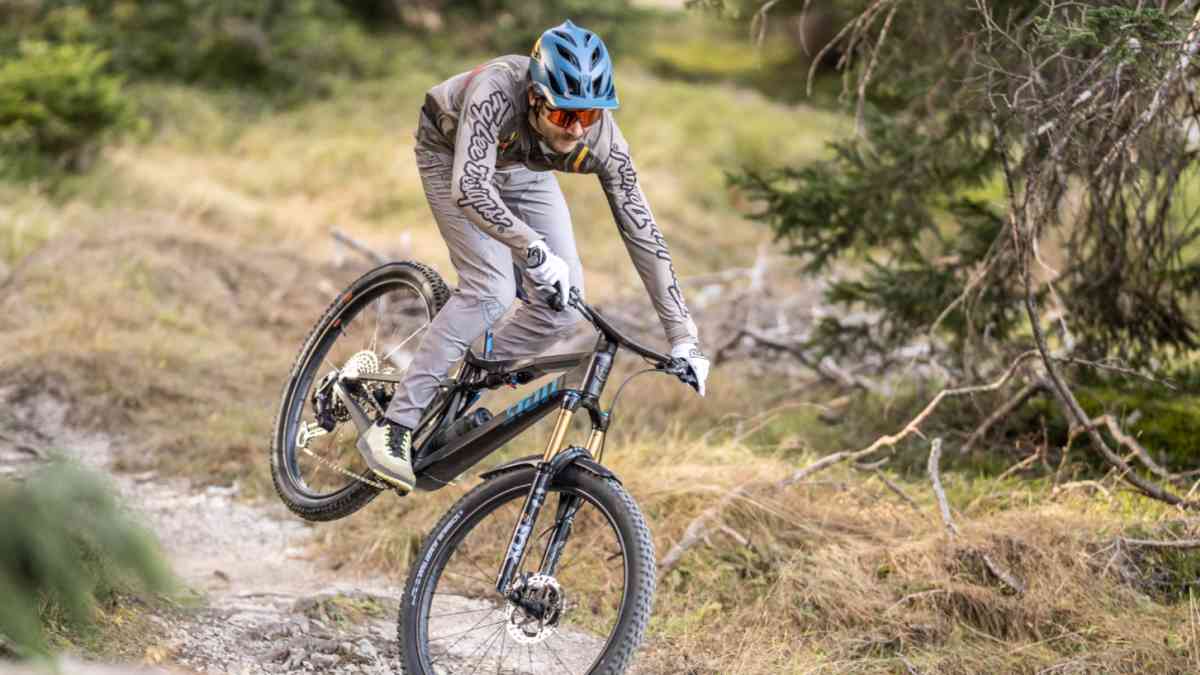
The handling is both confident and agile. A long reach value ensures good stability on the bike and - measured against the low weight - competent smoothness at high speeds. Admittedly: There are even fuller, more stable trail bikes on the market, but these carry a good two kilos more on the ribs. A short rear end with 438 millimetres of chainstay length makes manuals child's play and, together with the low weight, contributes to a high level of playfulness.
Downhill endurance test
In the Bikeländ Eberbach region, the 12.4-kilo Last Asco had to prove that it has more to offer than its delicate weight would suggest. It completed the large circuit with twelve exposed enduro trails and around 2,000 metres of depth each several times. And lo and behold, the trail bike from Last can do both touring and downhill. With powerful Shimano XTR brakes and a grippy front tyre, the Asco doesn't shy away from any descent. Although it may not reach the speed of a full-blown enduro specialist in rough terrain, the geometry and suspension have enough reserves to get the rider down any descent, no matter how difficult.
This ability was also underpinned by a visit to the BIKE Festival in Leogang, where our test rider threw himself down the World Cup downhill course on board the trail bike with 140 or 130 millimetres of suspension travel. Big ledges, drops and rock gardens? No real problem for the Last Asco. Of course, the bike's short travel is clearly noticeable compared to the real bike park bangers, but the good-natured handling and the relatively controlled and plush suspension encourage you to tackle really tough downhills. In capable hands and with a clever set-up, there are hardly any limits to the trail bike from Last.
Mileage
- Kilometres: 2500
- Altitude metres: 60,000
Wear & defects
Fortunately, the Last Asco only had to deal with one real defect during the entire endurance test. This concerned the standard Formula Cura 4 brakes, which were already causing problems at the start of the test due to a defective seal. The Italian stoppers also failed to impress in our latest brake comparison test. Last had installed a mechanical Sram GX drivetrain without transmission standard ex works. Although this saves costs and weight, it no longer corresponds to the current state of shifting technology and is less precise when changing gears under load. Switching to the expensive Shimano XTR di2 drivetrain solved the deficit, but caused surprisingly early wear. After just 2000 kilometres, there were clear signs of wear on the cassette and significant elongation of the chain. While the brake pads still have enough meat after this mileage, the brake discs have been subjected to uncharacteristically hard loads and are already worn down to the wear limit.
Despite the thin-walled rear tyres, the load had no punctures to complain about during the entire endurance test. The wheels continue to do their laps without any play or eights. The customised equipment proved to be efficient and reliable overall. The final report from the BIKE test lab also had nothing but good news for the Asco itself. The frame bearings still run smoothly and without play. The unpainted carbon frame is definitely prepared for many more kilometres on the trail despite its light weight and the toughest demands.
Conclusion
I'm a little sad that the Last Asco is leaving me again. Many of my colleagues were envious of the chic trail bike from Germany - and rightly so! The light weight, sensitive but controlled suspension and progressive, modern geometry make the bike fun to ride and confident on any terrain, from tame to wild. Combined with strong touring skills and high-end equipment, the Last Asco is a trail bike model student. - Jan Timmermann, BIKE editor
Pro
- Light weight boosts handling and touring expertise
- Playful and safe handling at the same time
- Custom options and carbon frames made in Germany
Contra
- Low weight restriction in the lightweight carbon layup

Jan Timmermann
Editor