


The Chumba Slackr is set to make a real splash. Hardtails with 140 or 150 millimetres of suspension travel are no longer a rare sight. Nevertheless, the Chumba Slackr stands out from the crowd. The reason lies not only in the long fork, but in the combination of a long-travel front end, a low centre of gravity, a steep seat angle and short, adjustable chainstays. Chumba itself describes the Slackr as the ‘slackest’ bike in its range to date. Here’s everything you need to know about this steel hardtail, made in the USA.
Conclusion
Chumba has been building incredibly stylish steel and titanium hardtails for over 30 years. The Sclackr is the most radical model in the range, yet it doesn’t go over the top – a bike that puts the joy of off-road riding at the heart of the experience. Anyone fascinated by handmade steel frames from the USA should definitely take a look at Chumba’s well-designed website. - Jan Timmermann, BIKE editor
The Chumba Slackr in detail
- Intended use: Trail hardtail
- Suspension travel: 140–150 mm
- Wheel size: 29”
- Frame material: steel / titanium
- Frame weight: from approx. 2 kg
- Price range: from approx. 1,640 euros
- Special features: Made in the USA, adjustable dropouts, mounts for a luggage rack and mudguard, customisable chainstay yoke design, custom geometry available
Chumba: Steel bicycles since 1993
Chumba’s history dates back to 1993, when Ted Tanouye founded the brand with the aim of building high-quality bicycles in small batches in the USA. Chumba initially became known primarily for its robust mountain bikes, intricate welds and unusual frame designs. Following a series of ownership changes and a period of strategic reorientation, the brand was rebuilt under new ownership from 2013 onwards and established in Austin, Texas. The relaunch was underpinned by a clear commitment to returning to the production of hand-built bicycles in small batches – initially including, amongst others, the XC hardtail ‘Stella’ and an early 29-plus model. Today, the range includes not only steel and titanium mountain bikes but also gravel, all-road and fat bikes.

Slack, but not too slack
The Chumba Slackr is designed as a long-travel trail hardtail. Depending on the specification, it features either a 140-millimetre or 150-millimetre front fork. In the current range, the bike is available with both titanium and steel frames. Both versions are designed for 29-inch wheels and accommodate tyres up to 29 x 2.6 inches. The idea behind this is clear: on fast, technical trails, the long front end is intended to provide reserves, whilst retaining the unfiltered feedback of a hardtail. Where a full-suspension bike smooths things out, the Slackr gives its rider immediate feedback from the terrain. Chumba therefore explicitly does not position the bike as a park machine. Rather, it is intended to be a trail bike for long days – one that still climbs efficiently even after several hours in the saddle, whilst still offering plenty of reserves for the descent.
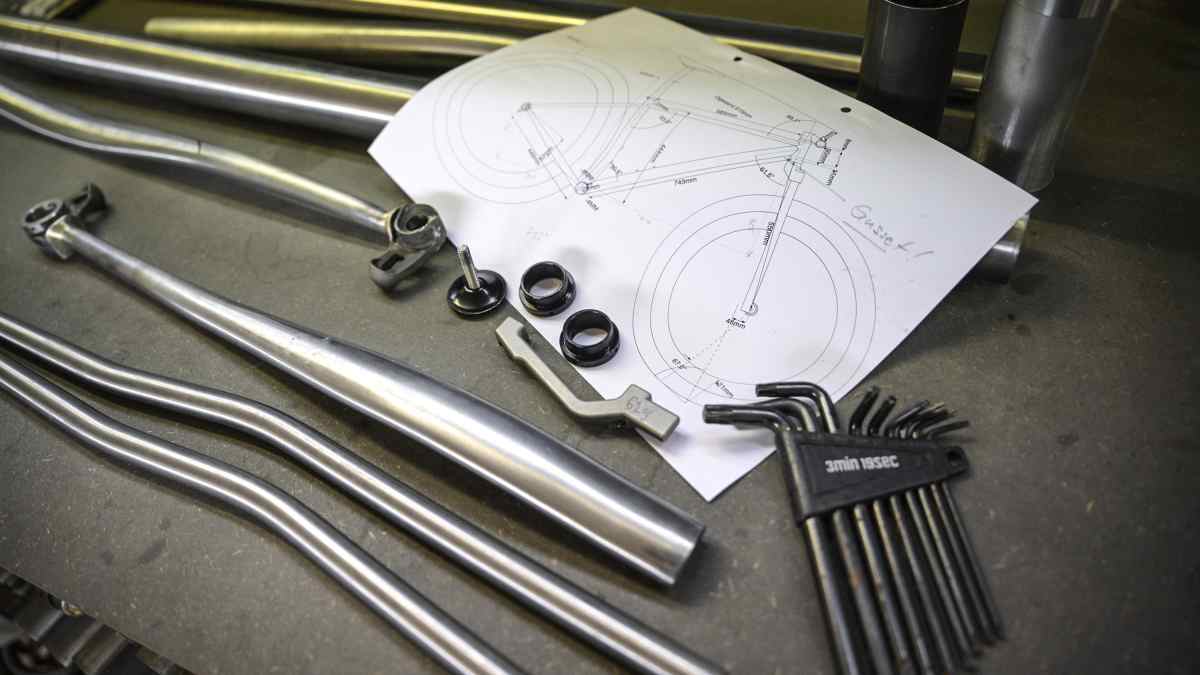
The Slackr becomes particularly interesting when you look at its geometry. The head angle is 64.5 degrees when unloaded and is specified as around 65.8 degrees with a stated sag of 20 per cent. At the same time, the seat angle is approximately 75 to 76 degrees, depending on the frame size. The slack head angle, combined with the long fork, ensures a smooth ride when the trail gets steep and rough. The relatively steep seat angle, on the other hand, pushes the rider forwards when climbing and is designed to prevent the front end from lifting too easily on steep ascents. Chumba is thus pursuing an approach that the manufacturer itself describes as ‘slacker where it counts’: maximising stability where it’s needed off-road, without turning the whole bike into a cumbersome enduro machine.
Another key feature in the Chumba Slackr’s geometry chart is the adjustable chainstays. Chumba combines a long front end with a short rear end – a combination designed to keep the Slackr playful despite its progressive geometry. The aim is to retain the direct, playful character of a hardtail. As such, the Slackr is aimed at riders who don’t simply want to race down a trail as fast as possible. Rather, it is intended to be a bike for trying out lines, riding over bumps, jumping off ledges and actively tackling technical sections. The ability to adjust the chainstays allows the handling to be shifted more towards agility or stability. Furthermore, this design enables the bike to be used with a single-speed drivetrain.
Steel or titanium
When it comes to materials, Chumba offers two options for the Slackr. The titanium version features titanium tubes manufactured in the USA. The material is lightweight, corrosion-resistant and renowned for its high fatigue strength. With the Slackr Ti, Chumba’s commitment to bespoke frames and builds really comes into its own. The company manufactures the bikes to order and offers both standard and bespoke geometries. Those who prioritise value for money over titanium will find the steel Slackr a suitable alternative. Here too, Chumba uses its own custom tubing and explicitly positions the bike as a robust, long-distance-capable trail hardtail.
A distinctive feature of the Chumba Slackr is the choice of chainstay yoke. The standard option comprises classic double-butted, oval tubes. The design is simple and promises a high level of comfort thanks to its pronounced damping. For an additional charge of around 500 US dollars, the yoke is produced using a 3D printer, resulting in a more compact and stiffer structure. This is said to deliver particularly direct handling over rough terrain. Customers can also order a wide range of mounting points or custom geometry. Individual paint finishes and builds are also available.
What do you think: what do you find most appealing about a steel hardtail mountain bike? Let us know in the comments!

Jan Timmermann
Editor