


New Merida Lithos e-enduro: A race enduro with Bosch power and modular geometry
Josh Welz
· 19.06.2026


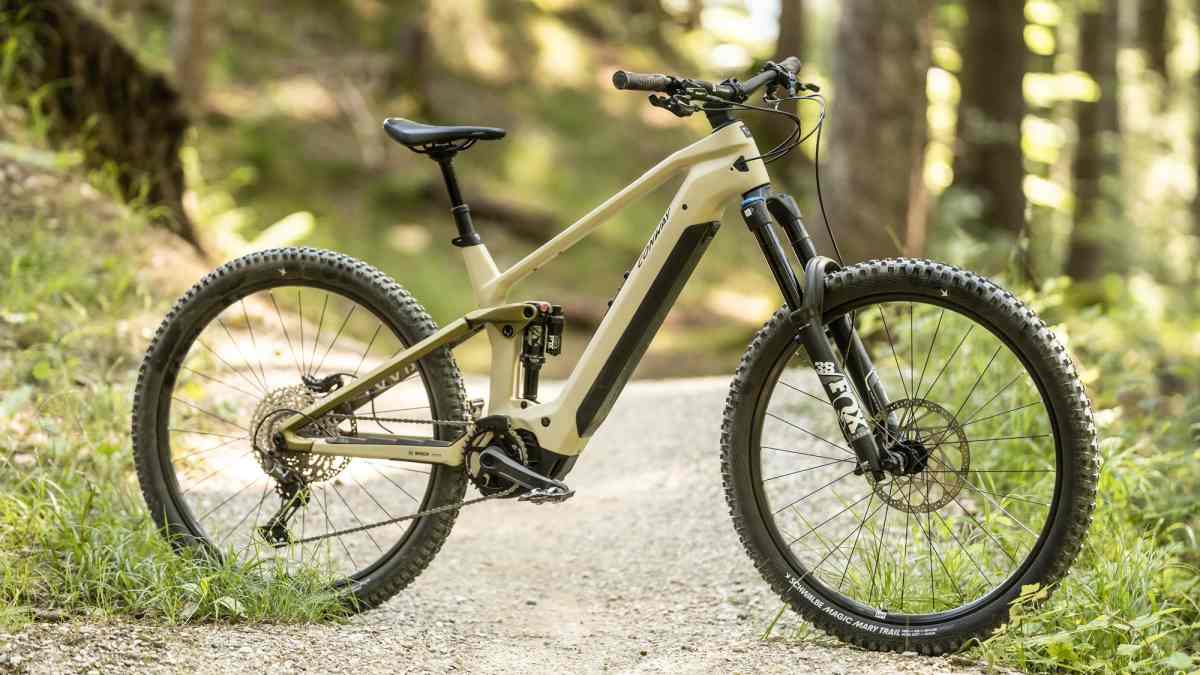
With the all-new Lithos, Merida presents a thoroughbred high-performance e-enduro bike. Initially available in three price ranges, it features a modern carbon frame, 170 mm of suspension travel and state-of-the-art Bosch drive technology.
In a nutshell
The new Merida Lithos aims to combine first-class downhill performance with a smooth ride. Thanks to a modular battery design, intelligent geometry adjustment and powerful Bosch motor, it is set to prove itself as a well-engineered, low-maintenance e-enduro bike designed for maximum racing speed on the toughest terrain.
With the launch of the new Lithos, Merida is introducing a new flagship model in the high-performance e-mountain bike segment. Named after the ancient Greek word for ‘rock’, this new model is specifically designed for ambitious enduro riders and racers who prioritise maximum speed and uncompromising efficiency on rough terrain. The Lithos is designed to extract the maximum momentum and propulsion from every trail. The bike combines a highly advanced carbon chassis with the latest generation of Bosch drive systems.

That does, however, make things rather crowded in Merida’s E-Gavity range. After all, the range already includes the affordable ETMO, featuring a robust aluminium frame, 160 mm of suspension travel and a Bosch drive. The same goes for the eONE-SIXTY, with its lightweight carbon frame and the somewhat dated Shimano EP801. At the top end of the range, Merida has positioned the eONE-EIGHTY with 180 mm of suspension travel for bike park and freeride use, featuring a Bosch CX motor and an 800 Wh battery. It remains to be seen whether the new Lithos will mean that one of these models is phased out of the range.
Frame design and kinematics
At the heart of the Lithos is a main frame made entirely from CF3 carbon, including a newly tuned rear triangle. Merida underlines its confidence in its in-house manufacturing expertise by offering a lifetime warranty to the original owner, certified for Category 4 (All Mountain & Enduro).
From a technical point of view, the tried-and-tested ‘Flexstay’ suspension design stands out. By deliberately omitting a separate joint between the seat tube and chainstay, not only is the system’s weight reduced, but maintenance requirements are also minimised, as there are fewer bearing points susceptible to dirt and wear. At the remaining pivot points, the manufacturer uses extra-large industrial bearings to guarantee consistently smooth performance.
The suspension kinematics provide generous rear travel of up to 174 mm in the ‘mullet’ setup, which is combined with a 170-mm suspension fork at the front. A key design feature is the absence of a shock yoke. This direct linkage eliminates harmful lateral forces on the shock, protects against premature wear of the seals and ensures a progressive response curve. This is designed to ensure the system operates with equal sensitivity in the initial travel range whilst offering ample bottom-out reserve during hard impacts – enabling unrestricted compatibility with both modern, high-volume air shocks and classic steel-spring shocks. The result is a rear suspension that remains particularly stable under maximum load.
Powertrain and modular battery concept
For the motor, Merida has opted for the fifth generation of Bosch Performance CX and CX-Race drive units. These units deliver a peak torque of up to 120 Nm and a maximum power output of 750 watts, making even the steepest and most technically demanding climbs rideable.
A key highlight of the Lithos is its extremely versatile, modular battery system. Riders can choose between the Bosch PowerTube battery with 800 Wh for maximum range or the smaller, lighter 600 Wh version. Switching to the 600 Wh battery saves around 900 grams in weight and noticeably lowers the bike’s centre of gravity, which gives lighter riders in particular more agile handling. The battery housing is secured to the down tube using a Fidlock fastener and can be removed in a jiffy. The highlight: the Lithos comes as standard with two different battery covers – the bulkier ‘Beluga cover’ for the 800 Wh battery and a flatter, sleeker cover for the 600 Wh version, to perfectly match the bike’s silhouette. For extremely long distances, the system can also be expanded with the Bosch PowerMore Range Extender.
Detailed solutions, integration and ease of maintenance
The focus on racing performance and everyday practicality is reflected in numerous design details of the frame. The so-called dual-routing system allows for maximum flexibility in cable routing. The bike is supplied ex-works with the fully integrated Acros ‘Wire Port’ headset, through which all cables are routed invisibly via the headset. Those who prefer a more traditional, low-maintenance option can route the cables partially externally into the frame via the ‘Thermo Gate’ openings on the side of the head tube. Inside the main frame, laminated carbon guide channels (liners) ensure that new cables can be routed without fiddling about and that rattling noises are effectively prevented.
In addition, the Lithos features integrated storage solutions: beneath the saddle is a V-mount holder including a Merida multi-tool, whilst a Tube Base Plate is fitted to the frame for attaching a spare inner tube, and the rear thru-axle tension lever houses an integrated 4 and 6 mm Allen key. This means that, in the event of a puncture, almost all essential repairs can be carried out directly on the trail. A robust, wide chainstay guard and heel guards protect the carbon frame from mechanical damage.
Variable geometry
The Lithos’s geometry is designed to prioritise downhill control, yet thanks to a steep seat angle of 78.5°, it does not compromise on climbing performance. The head angle is a shallow 64°. A striking feature is the decision to significantly increase the stack – that is, the height of the front end – across all five frame sizes (XS to XL), which is intended to provide added safety on steep sections.
This is combined with the clever ‘Agilometer’ sizing system. As the seat tubes are designed to be extremely short and straight, they offer a deep seat tube depth. Merida fits one of its own adjustable dropper posts (Team TR II) as standard, with a massive 230 mm of travel. The key feature: the travel can be reduced continuously by up to 200 mm without the need for tools. Riders therefore no longer choose their frame size primarily based on leg length, but purely on the desired riding characteristics (short reach for agility, long reach for a smooth ride).
Another highlight is the flip-chip system on the swingarm. The bike comes as standard with an agile mullet setup (29-inch front, 27.5-inch rear). By flipping the flip-chip, the Lithos can be converted to a pure 29-inch rear wheel without any change to the bottom bracket height or steering angle. In pure 29-inch mode, the rear travel changes to 160 mm and the chainstay length to 449 mm (compared to 174 mm of travel and a 447 mm chainstay in Mullet mode).
Geometry table (Standard Mullet)
| Wheel size (front/rear) | 29" / 27.5" | 29" / 27.5" | 29" / 27.5" | 29" / 27.5" | 29" / 27.5" |
| Seat tube length (ST) [mm] | 400 | 410 | 425 | 445 | 465 |
| Top tube length (TT) [mm] | 553 | 570 | 593 | 621 | 650 |
| Chainstay length (CS) [mm] | 447 | 447 | 447 | 447 | 447 |
| Steering angle (HTA) [°] | 64.0 | 64.0 | 64.0 | 64.0 | 64.0 |
| Seat angle (STA) [°] | 78.5 | 78.5 | 78.5 | 78.5 | 78.5 |
| Stack [mm] | 628 | 637 | 646 | 655 | 669 |
| Reach [mm] | 425 | 440 | 460 | 485 | 510 |
An overview of the model variants
The Merida Lithos is initially being launched in three high-spec variants, covering the entire spectrum from a sophisticated high-end racing bike to a solid performance machine. Whilst the 10K, 8000 and 6000 models are available in Germany with immediate effect, the 5000 and 4000 models will follow at a later date to round off the range at the lower end of the price scale. All five models will be available in two colour options each.

Merida Lithos 10K
- Price: 11,699 euros
- Drive / Gearbox: Bosch CX-R / SRAM XO Eagle AXS drivetrain (12-speed)
- Suspension fork: Fox Podium Factory (170 mm)
- Damper: Fox Float DHX Factory Live Valve Neo with SLS Coil (electronically controlled)
- Wheels: DT Swiss HXC 1500 (carbon, 30 mm internal width)
- Tyres: Continental Kryptotal-F / Continental Kryptotal-R (29" x 2.4" front / 27.5" x 2.4" rear)

Merida Lithos 8000
- Price: €8,899
- Drive / Gearbox: Bosch CX-R / SRAM GX Eagle AXS drivetrain (12-speed)
- Suspension fork: Rock Shox Zeb Ultimate eMTB (170 mm)
- Damper: Rock Shox Vivid Ultimate
- Wheels: DT Swiss HX 1700 (aluminium, 30 mm internal width)
- Tyres: Continental Kryptotal-F / Continental Kryptotal-R (29" x 2.4" front / 27.5" x 2.4" rear)

Merida Lithos 6000
- Price: €6,899
- Drive / Gearbox: Bosch CX / SRAM Eagle 50 drivetrain
- Suspension fork: Rock Shox Zeb Select eMTB (170 mm)
- Damper: Rock Shox Vivid
- Wheels: Reynolds 309 Enduro Comp rims (aluminium)
- Tyres: Continental Kryptotal-F / Continental Kryptotal-R (29" x 2.4" front / 27.5" x 2.4" rear)
The price for the Lithos 5000 model is expected to be 5,699 euros, whilst Merida plans to price the entry-level Lithos 4000 model at 4,799 euros.
Conclusion
With the Lithos, Merida delivers an uncompromising racing machine for demanding terrain. Well-thought-out details such as the extremely versatile wheel configuration via the flip-chip, the highly customisable sizing concept and the modular Bosch battery system all point to outstanding versatility. Combined with a smooth ride and the precisely tuned stiffness of the CF3 carbon frame, Merida aims to make a strong statement in the high-performance e-enduro segment with the Lithos, catering for demanding descents and racing.



Josh Welz
Editor-in-Chief