


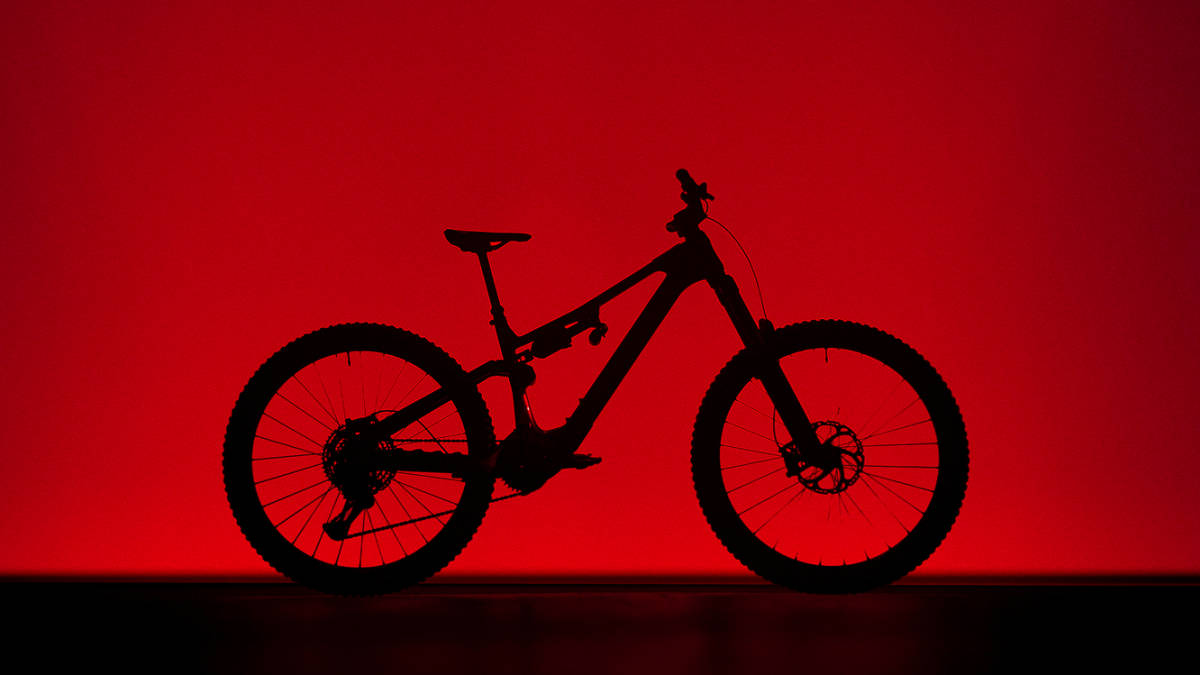
The new E-Enduro from Forbidden has a consistent focus on technical terrain. 170 mm rear suspension travel works together with a 180 mm fork. The Trifecta V3 kinematics utilise a high-pivot layout with a four-link design.
The shock is positioned vertically in the frame, which creates space for long seat posts. A 180 mm dropper post fits even in frame size S1. The axle path runs to the rear, which should provide traction when lowering the heels. At the same time, the manufacturer promises enough support for jumps and active pumping.
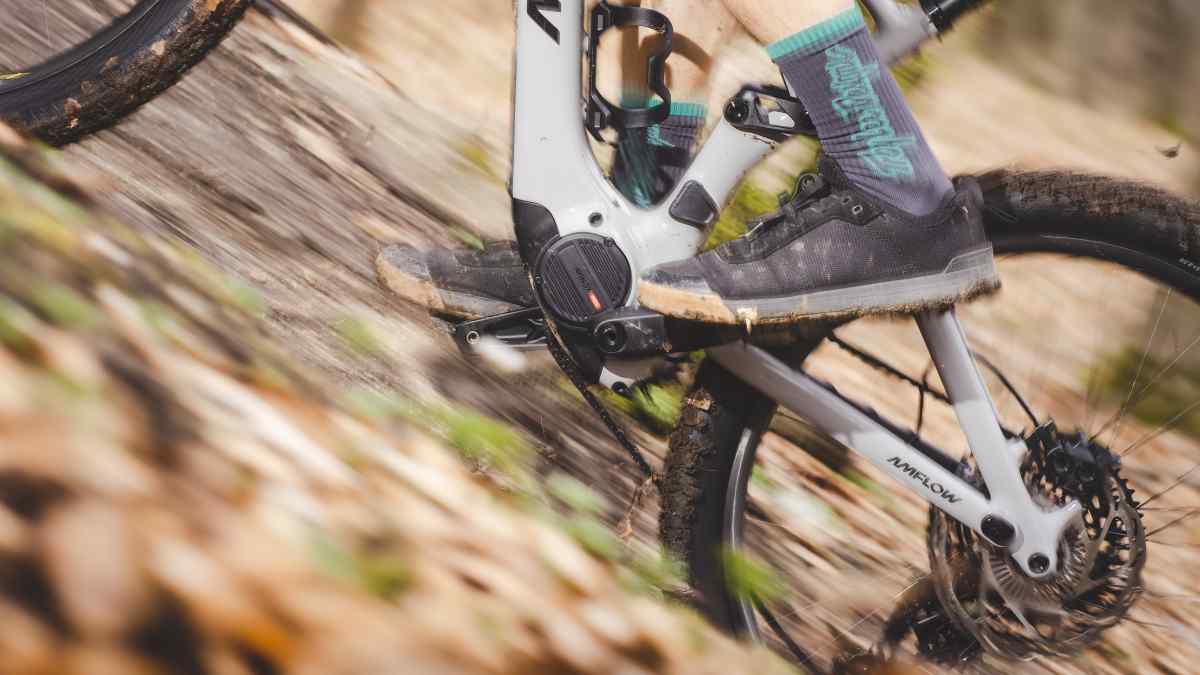
The turbo effect: Avinox M2S and M2
Forbidden offers the Dreadnought E with two engine variants. The M2S is used in the Tier 1 and Tier 2 equipment levels. It delivers 130 Nm of torque, rising to 150 Nm in boost mode. Peak power reaches 1300 watts at a weight of 2.6 kg. The M2 for Tier 3 and Tier 4 levels delivers 110 Nm, and 125 Nm in boost mode. The peak power is 1100 watts and the weight is 2.65 kg.
Both motors work together with the Avinox Ride app, which allows all support modes to be customised. A 2-inch colour OLED display serves as the control centre. The quick-charge function takes the battery from zero to 75 per cent in an hour and a half. The display has a 65-watt USB-C output for charging lamps or smartphones.

Battery options, weight & price
Two battery sizes are available. The 600 Wh version reduces the weight to a maximum of 23.43 kg. The 800 Wh version increases the range, but weighs a maximum of 24.30 kg. Forbidden describes the 600 Wh option as a solution for better handling, the 800 Wh version for longer tours.
The new navigation system of the Avinox unit imports GPX, FIT or TCX files and shows the route directly on the display. Alternatively, navigation apps can be linked.
Prices start at 7699 euros for the T4 with 600 WH battery. The T3 costs 9199 euros, T2 = 10,699 euros and the top model T1 with a large battery = 11,999 euros.
Mullet geometry with a downhill focus
The Dreadnought E uses exclusively mullet wheels with 29-inch front and 27.5-inch rear tyres. According to the manufacturer, the geometry is uncompromisingly designed for descents. A high stack, slack angles and short cranks define the design. As a result, the riding position should be more centred, upright and relaxed.
Forbidden promises the control and precision of a downhill racer. The OneRide concept ensures proportional gradation across all frame sizes. The chainstays become longer as the frame size increases and the seat angle becomes steeper. This is intended to maintain the balance uphill and downhill across all sizes.
The geometry values are close to the Supernought model. The increased stack in combination with shorter cranks straightens the posture. The mullet set-up makes it easier to change direction and gives you more influence on the riding behaviour.
Geo data for sizes S1 to S4
| REACH | 425 | 445 | 461 | 481 |
| STACK | 635 | 648 | 669 | 682 |
| HORIZONTAL TOP TUBE LENGTH | 575 | 598 | 619 | 642 |
| SEAT TUBE LENGTH | 400 | 420 | 440 | 470 |
| SEAT TUBE ANGLE (effective) | 76.75 | 76.75 | 76.75 | 76.75 |
| SEAT TUBE ANGLE (actual) | 71.6 | 73.7 | 75.4 | 76.8 |
| HEAD TUBE LENGTH | 100 | 115 | 138 | 153 |
| HEAD TUBE ANGLE | 63 | 63 | 63 | 63 |
| FRONT CENTER | 782 | 808 | 835 | 861 |
| REAR CENTER | 434 | 449 | 463 | 478 |
| WHEELBASE | 1215.5 | 1256.9 | 1298.2 | 1339.5 |
| BB DROP | -20.0 | -20.0 | -20.0 | -20.0 |
| BB HEIGHT* | 340.8 | 340.8 | 340.8 | 340.8 |
| STANDOVER HEIGHT* | 720 | 720 | 720 | 720 |
| FORK LENGTH | 596 | 596 | 596 | 596 |
| FORK OFFSET | 44 | 44 | 44 | 44 |
Trifecta V3 with carbon rocker
The third generation of the Trifecta suspension retains the high-pivot principle and the four-link design. The vertical damper position creates space for the motor and battery. The rocker link is made of carbon, which reduces unsprung mass and isolates the shock from lateral forces. The progressiveness of the rear triangle is created by this design.
All dampers utilise 8 x 30 mm bearing hardware at the top and bottom. The kinematics work together with modern coil and air dampers with a large volume. An 18-tooth steel idler with two Enduro Solid Lube bearings reduces pedal kickback. The tooth profile has been revised to increase durability and ensure compatibility with current drivetrains.
Integration and details
Models with SRAM AXS shifting are equipped with the AXS Extension Cord. This connection feeds the drivetrain directly from the main battery, eliminating the need for a separate AXS battery. The Smooth Shift function enables shifting operations without pedalling, which helps on steep climbs or descents and should reduce wear.
The cable routing dispenses with headset routing. Customisable cable ports allow clean routing regardless of brake hand preference. All bolts can be checked with a multitool. Forbidden has developed specific frame protection for the chainstays, seat stays, down tube and motor cover. All models come from the factory with RideWrap in high-stress areas.
Even the smallest frame size can accommodate a large water bottle, regardless of the shock reservoir. A Fidlock mount is included as standard. Forbidden offers a lifetime guarantee on all carbon frames.
Dreadnought? What does that mean?
The term "dreadnought" marks a radical change of era that went far beyond the mere naming. With the commissioning of the British HMS Dreadnought in 1906, the Royal Navy revolutionised naval warfare: thanks to the innovative "all-big-gun" principle and the first use of steam turbines, the ship was technically so far superior to the competition that all existing fleets were suddenly considered obsolete.
This technological quantum leap not only triggered an unprecedented global arms race, but also established the name "dreadnought" as a generic term for a completely new class of modern battleships, the echoes of which still reverberate today in pop culture and in the designation for particularly voluminous designs.


Dimitri Lehner
Editor