


A work in progress straight from the factory, a dream on the downhill: The Forestal Siryon Diode in the Enduro endurance test
Max Fuchs
· 12.07.2026


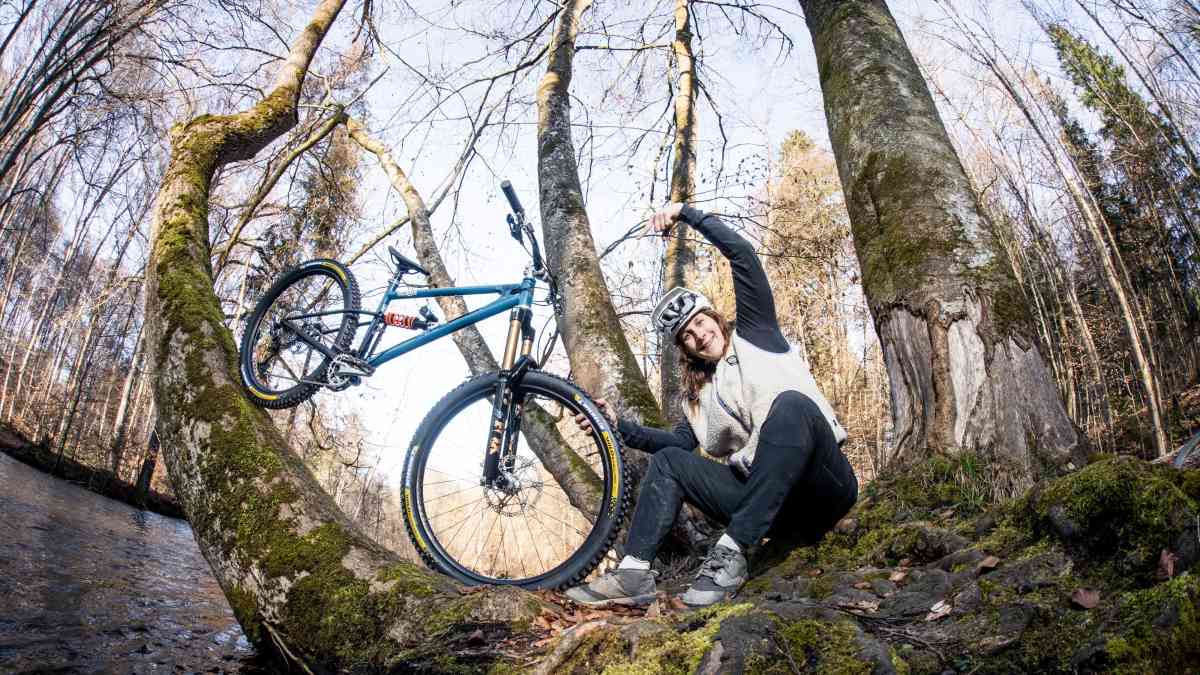
It makes a difference going downhill Forestal Siryon Diode In a league of its own: the rear end is incredibly responsive, delivering incredible traction even on rough terrain, and the 170 millimetres of suspension travel at both ends instil such confidence that you just want to ride flat out. The geometry feels balanced, pleasantly nimble and precise to handle – a successful race bike. So far, the Siryon is living up to the promise of its test victory.
The facts about the Forestal Siryon Diode endurance test
| Under review since: | January 2026 |
| Category: | Enduro |
| Tested: | 685.02 km |
| Depth gauge: | 25,568 m |
| Journey time: | 55 hours |
| Suspension travel: | 170 mm at the front / 170 mm at the rear |
| Frame size: | M (rider height 176 cm) |
| Fork: | Fox 38 Grip X2 Factory |
| Damper: | Fox Float X2 Factory |
| Circuit / Bandwidth: | SRAM X0 AXS drivetrain / 520 % |
| Brakes: | Formula Cura 4 / 203 mm at the front, 180 mm at the rear |
| Wheels: | Crankbrothers Synthesis E |
| Tyres: | Schwalbe Albert Gravity Ultrasoft / Soft Radial 29 × 2.6 |
| Seat post / travel: | OneUp / 150 mm (standard) |
| Max. system weight: | 120 kg |
| Warranty: | 7 years |
| Special features: | Fidlock mount and fastener on the storage compartment |
| Total weight (excluding pedals): | 16.17 kg |
| Weight of wheels: | 5927 g |
Lukas’ first update on the Forestal Siryon Diode
First of all: I’ve so far covered 685.02 kilometres, 25,568 metres of elevation gain and spent around 55 hours on the Siryon. That’s enough to move beyond first impressions – and enough for the first signs of wear and tear and issues with build quality to become apparent.
First impression: Sloppily assembled
The first blow to my enthusiasm came as soon as I unpacked it: the factory assembly left a lot to be desired. The most annoying thing was the cable on the telescopic strut – it’s simply too short. The result: when turning the handlebars, the cable comes under tension and the stem extends without you even touching the lever. So I decided to have a go at fixing it myself. When I tried to run a new cable, I realised that routing it internally is anything but straightforward: although there are laminated cable guides all the way to the bottom bracket, they end at a point that cannot be reached either by hand or with specialist tools.

As the 150-millimetre travel of the fitted OneUp dropper post was too short for my liking anyway, I decided to fit a wireless dropper post with 170-millimetre travel – that way I avoided the hassle of cables and have more legroom on descents. A perfect solution, I thought. But I was soon brought back down to earth: on the first-generation wireless RockShox Reverb, the battery sits at the rear, underneath the saddle. I soon realised that the Forestal isn’t compatible with this seatpost. Deep in the suspension travel, the rear wheel would hit the battery – and eventually I lost the little power pack in the bike park.
Possible solution: a lightweight battery from a third-party supplier, only half the size. At first, this seemed to work – until it, too, was knocked out of its mount by the rear wheel during a hard landing. How I’ll tackle this issue going forward remains to be seen. Unless I want to have another go at rerouting the cables, my only real option is a new strut with a different battery mount.
Brakes: Piston return and lever travel are problematic
Alongside the strut came the next nuisance: right from the start, the piston return mechanism on the Formula Cura 4 Problems with the front and rear brakes. Piston massage, bleeding the brakes – repeated the whole process several times – to no avail.
I’ve now fitted new master cylinders and calipers. For the rear brake, I deliberately left the old hose in the frame to save myself the trouble of routing the hose through the frame (see above). With the new braking system, the return mechanism finally works. I’m generally happy with the braking performance – it’s just that, for my liking, the levers can’t be positioned close enough to the handlebars. For people with small hands, that’s a real no-go. Incidentally, I’ve already gone through two new sets of brake pads.
Rattling, crackling, play
After about 20,000 metres of descent, the rear end started to rattle. First, I set to work with the torque wrench – two bolts were too loose. The actual cause, however, lies elsewhere: the shock mount in the top tube has some play. I haven’t taken it apart yet; it was only on my last ride that I managed to pinpoint where the noise was coming from.
On top of that, there are two ongoing issues: the bottom bracket has been making a slight creaking noise on the right-hand side for around 80 kilometres. And the lid of the storage compartment has been rattling since the start of the test – in my opinion, the gaps are too wide here, and there’s also no rubber seal or similar to dampen vibrations and noise.
Cockpit modification: Handlebars raised, reach remains the same
Because of the short head tube, the Siryon comes with a thick stack of spacers – but this means the stem is clamped to an almost perfectly straight set of handlebars, with virtually no rise. It’s a combination that didn’t make sense to me. After the initial familiarisation phase in the cycling mecca of Finale Ligure, I dismantled the handlebar-stem combination; I now ride a handlebar with 55 millimetres of rise. A positive side effect: with the higher handlebar, I was able to save on spacers and thus slightly extend the effective reach despite the higher front end. Before that, the bike had actually felt quite short to me – at 176 centimetres tall, I fall exactly between sizes M and L on the Forestal. In the end, however, I opted for the shorter M. Thanks to the new cockpit, the riding position is now no longer quite so compact.
Interim findings from long-term tester Lukas Königer
Despite all the tinkering – out on the trail, you quickly forget just how much the bike had been getting on your nerves in the workshop. In my view, the geometry is perfect for an enduro bike. Not too long and sluggish, but not too short and twitchy either. Just superbly balanced. The rear end is extremely responsive, and it literally soaks up rapid succession of bumps on rough terrain. That’s one of the Forestal’s greatest strengths. The voluminous rear swingarm is connected to the main frame via an additional rocker arm. The rear triangle’s stiffness is pleasantly low, so that the rear wheel generates excellent traction and stays firmly on track, even on the roughest ideal line. In the next update, I’ll be tackling the shock mount and the creaking bottom bracket – and I’ll let you know whether the seatpost has finally stopped making noise. Until then, I’m looking forward to plenty of enduro action on the Forestal Siryon Diode.

Max Fuchs
Editor