


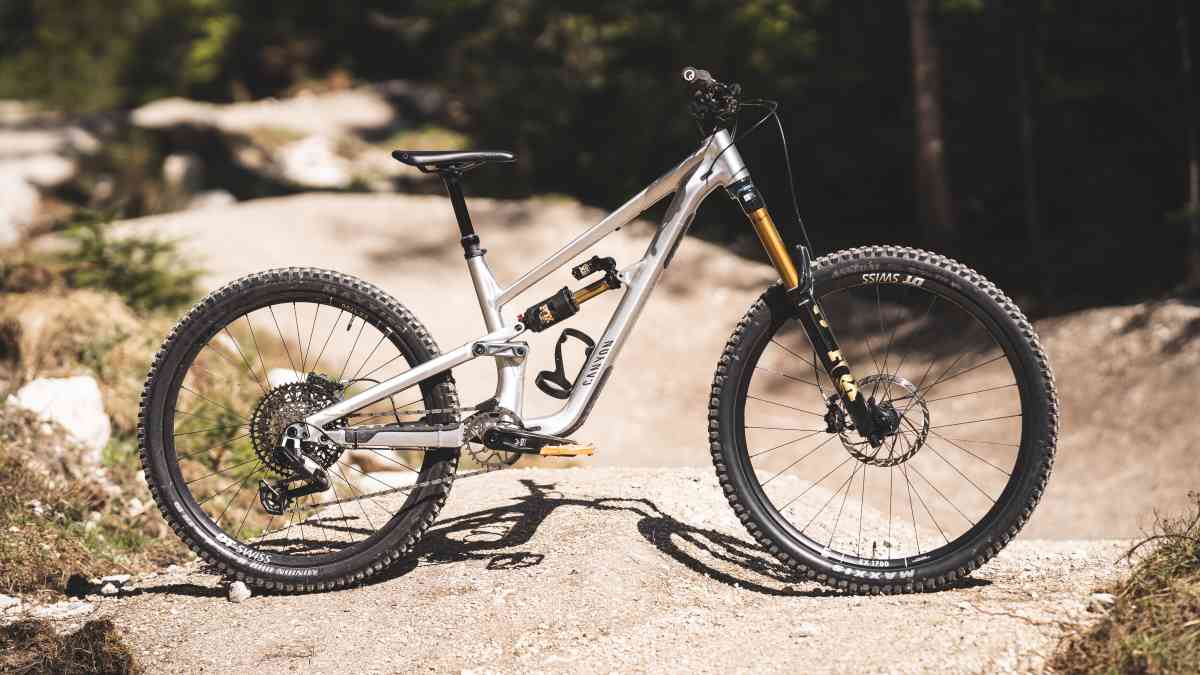
The Torque has always been the most honest bike in the Canyon portfolio: rough, uncompromising, without airs and graces. The new AL goes one better. 180 mm travel everywhere, mullet, modular dropouts for two chainstay lengths - and all for under € 4,000 with Fox Factory suspension. Canyon proves once again that you don't have to play the carbon card for uncompromising gravity performance. - Max Fuchs, BIKE test editor
1. 180 mm stroke - more suspension travel, more reserves
Canyon has increased the travel of the new Torque AL to 180 mm at the front and rear, leaving no doubt as to its riding philosophy. The 4-bar rear suspension utilises a progressive leverage ratio: sensitive and traction-boosting early in the stroke, with powerful support at the end of the stroke for hard landings. Compared to previous generations, the anti-squat value has been increased, but pedal kickback has been reduced. The only exception: size XS has 170 mm rear suspension travel and a smaller 250 × 70 mm shock.
2. modular T-type dropouts: two chainstay lengths, one bike
The real unique selling point is hidden in the rear triangle. Canyon uses modular, T-type compatible dropouts. Depending on the specification, the chainstays measure 430 mm (short, playful, agile) or 440 mm (longer, more stable at high speeds). Both versions are supplied with the bike in the box - no need to buy accessories. The change only takes a few minutes with a hexagon socket. For riders who ride the Torque both in the bike park and on enduro trails, this is real added value: same frame, two different characters.
3. category 5 aluminium frame: the toughest test standard
Canyon tests the new Torque AL frame according to the Category 5 standard - the strictest EU load standard, reserved for bikes in DH, bike park and rampage scenarios. These are concrete, defined test loads - not a marketing statement. Also good for durability: rubberised frame protectors at all neuralgic points (down tube, seat stay, chain stay). Canyon gives the frame weight as 3.5 kg for size M (without shock).
4. coil or air: both damper types welcome
The front frame triangle of the Torque AL has space for both air and steel spring dampers. If you prefer the softer, less progressive character of a steel spring damper, you can easily retrofit one. The standard air shocks offer a wide range of tuning options - with sag and damping settings, all types of riders will find their perfect setup with the Torque. Coil riders must pay attention to the correct spring rate.
5. suitable for single crown or double bridge forks
The Torque AL can also be converted into a mini downhiller with a double crown fork - Canyon explicitly gives the green light as long as the fork travel remains limited to 190 mm (the frame has not been tested for more than 190 mm front suspension). If you don't want to upgrade yourself, Canyon offers the AL DH model with the RockShox BoXXer Select ex works for € 2,999 including a 7-speed DH drivetrain. This makes the Torque AL one of the few bikes in this price range that covers such a wide range of applications. When using a double bridge, the steering angle becomes approx. 0.5 degrees slacker, which can be compensated for using a flip chip on the shock mount.


Max Fuchs
Editor
