


2,000 km on a short-travel full-suspension bike: How reliable is the BH Lynx SLS in an endurance test?
Max Fuchs
· 30.06.2026


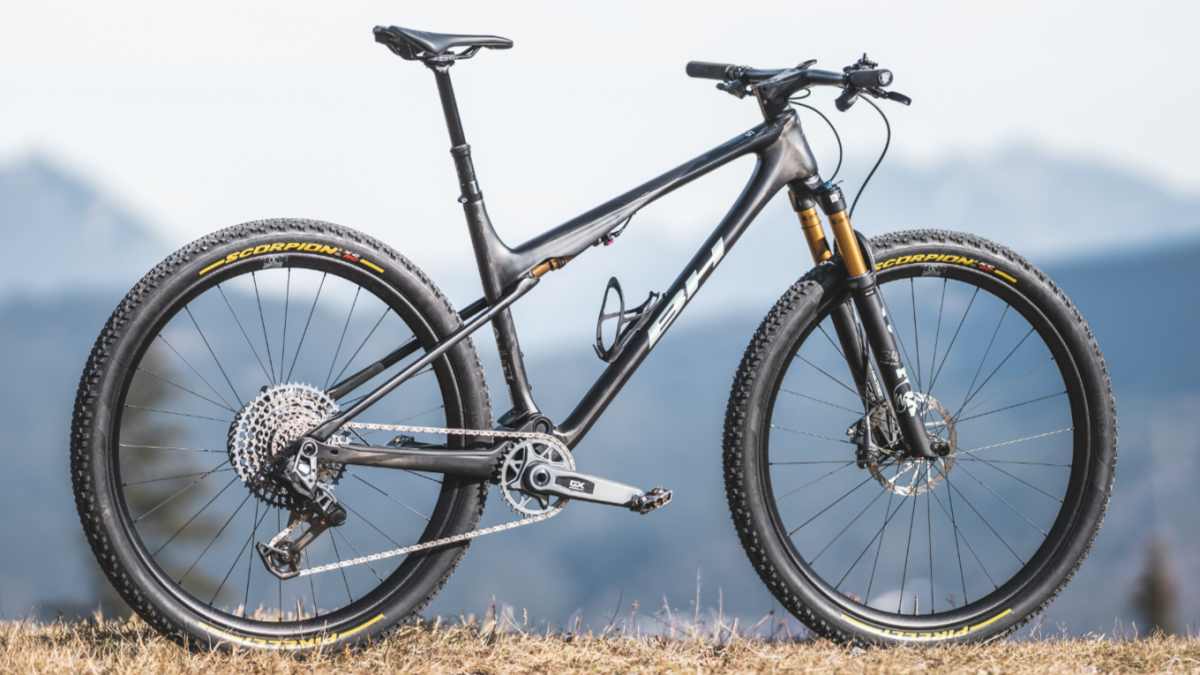
It’s clear from the very first glance at the data sheet: The Lynx SLS It’s not meant to be a traditional full-suspension bike. 80 millimetres of rear suspension travel is paired with a 110-millimetre fork – a setup we’ve already seen in a similar form on the Trek Supercaliber and Specialized Epic World Cup know. The editorial team’s brief was therefore clearly set out: Find out whether the ‘Al-dente-Race-Fully’ bras work just as well and, above all, are just as reliable.

Features of the Lynx SLS bra
- Fork / Shock: Fox 34 SC Factory / Float Factory
- Gear system / Range: SRAM GX AXS Transmission / 520 %
- Brakes: SRAM Level Bronze / 180/160 mm
- Wheels: BH EA 30 SL
- Tyres: Pirelli Scorpion XC 29 x 2.4
- Seatpost / Travel: Bike Yoke Divine SL / 125 mm
- Max. system weight: 145 kg
- Warranty: lifetime
- Special features: Carbon handlebar-stem assembly with optional tool
From the test laboratory
- Total weight: 11.21 kg excluding pedals
- Frame weight: 1693 g
- Weight of wheels: 4243 g
- Impeller inertia: 3219 kg x cm²
Scepticism regarding the limited suspension travel
I must admit: the change wasn’t easy for me. Before that, I used to drive The Arc8 Evolve put through its paces – a trail-oriented racer with 120 millimetres of suspension travel and a long, flat geometry, which instils enormous confidence on descents. I was therefore sceptical as to whether the BH, with its significantly sportier design, could hold its own here.

Yet even the very first rides showed that travel alone isn’t the deciding factor. The Split-Pivot rear suspension is remarkably responsive, reacts with great sensitivity and works surprisingly well in tandem with the Fox 34 Factory fork. On gentle trails, the bike performs superbly – it’s great fun to ride, efficient and inspires plenty of confidence.
Fine-tuning the setup for greater convenience
The setup wasn’t quite perfect at first, though. After the first few kilometres, two volume spacers flew out of the fork. The reason: the front suspension is far too progressive for my liking. On longer descents, the stiff feedback quickly left my arms feeling tired.
I found the fork much easier to handle with the increased air volume: it responds more sensitively, makes better use of the suspension travel and now complements the comfortable rear end much better.
I also had the pleasure of testing a set of Roval Control World Cup wheels. They eliminated even the last trace of sluggishness from the Lynx SLS, which had been caused by the relatively heavy aluminium wheels fitted as standard.
Efficient going uphill, a bit shaky going downhill
Once you’ve got used to it, the BH really impresses with its efficiency. The rear end barely bobs; the sporty riding position puts noticeable pressure on the pedals – the drive is razor-sharp and, with the suspension locked out, comes relatively close to the feel of a hardtail. That’s a testament to the frame design. On other full-suspension bikes, significantly more lateral twisting was noticeable when riding out of the saddle than on the Lynx SLS.
Downhill, however, the bike reveals its limitations. The geometry, with its steep head angle and short wheelbase, demands your full concentration at high speeds. A smooth ride? Not a chance. Especially on steep, technical terrain, you ride in a much more active and less confident manner than on more modern trail or downcountry bikes.
Everyday life and sustainability
Once you’ve got used to it, the BH really impresses with its efficiency. The rear end barely bobs, the sporty riding position puts plenty of pressure on the pedals – the forward momentum is razor-sharp. If you flip the lockout lever on the handlebars and lock the suspension, the BH comes relatively close to matching the sprinting capabilities of a hardtail. Most other full-suspension bikes with 100 or 120 millimetres of rear travel tend to buckle more when riding out of the saddle.
Downhill, however, the bike also reveals its limitations. The geometry, with its steep head angle and short wheelbase, demands your full concentration at high speeds. A smooth ride? Not a chance. Especially on steep, technical terrain, the BH takes its toll and requires a lot of physical effort and riding technique to keep it on track.
Conclusion by Maximilian Fehr, BIKE test rider
For me, the BH Lynx SLS is somehow caught between two stools. The rear end impresses with its responsiveness, and the forward drive is top-notch. This is where the bike shows its racing pedigree. However, the conservative geometry saps confidence on descents and requires extra effort, whilst minor flaws in the details detract from the overall impression. Fitted with lighter wheels, this bike has the makings of a marathon specialist. However, it lacks the confidence needed to excel on technically demanding XC courses.
Rating
Positive (+)
- Efficient tunnelling
- A responsive rear suspension
- A well-balanced chassis design
Negative (-)
- Unsteady geometry at high speed
- Limited ease of maintenance
- Unfavourable bottle holder position
- A bit too heavy for a race-spec full-suspension bike

Max Fuchs
Editor