


Trek Rail+ 9.8 E-All-Mountain review: Its biggest weakness is its strongest selling point!
Max Fuchs
· 12.09.2026


Verdict on the Trek Rail+ 9.8 GX AXS T-Type Gen5 test
Das Rail+ punktet als reichweitenstarkes und edel ausgestattetes Touren-Fully. Die lange, laufruhige Geometrie sorgt für Fahrsicherheit, während das komfortable Fahrwerk auch lange Tage im Sattel angenehm gestaltet. In extrem technischem Gelände stößt das Bike bergauf wie bergab jedoch an seine Grenzen. Trotz der zahlreichen Einstellmöglichkeiten blieb uns der Sweetspot beim Handling verwehrt.
Data and facts about the Trek Rail+ 9.8 GX AXS T-Type Gen5
| Price | 7.499,00 € |
| Suspension travel | 160 mm |
| Weight | 23.92 kg |
| Motor | Bosch Performance Line CX |
| Battery | Bosch Power Tube 800 |
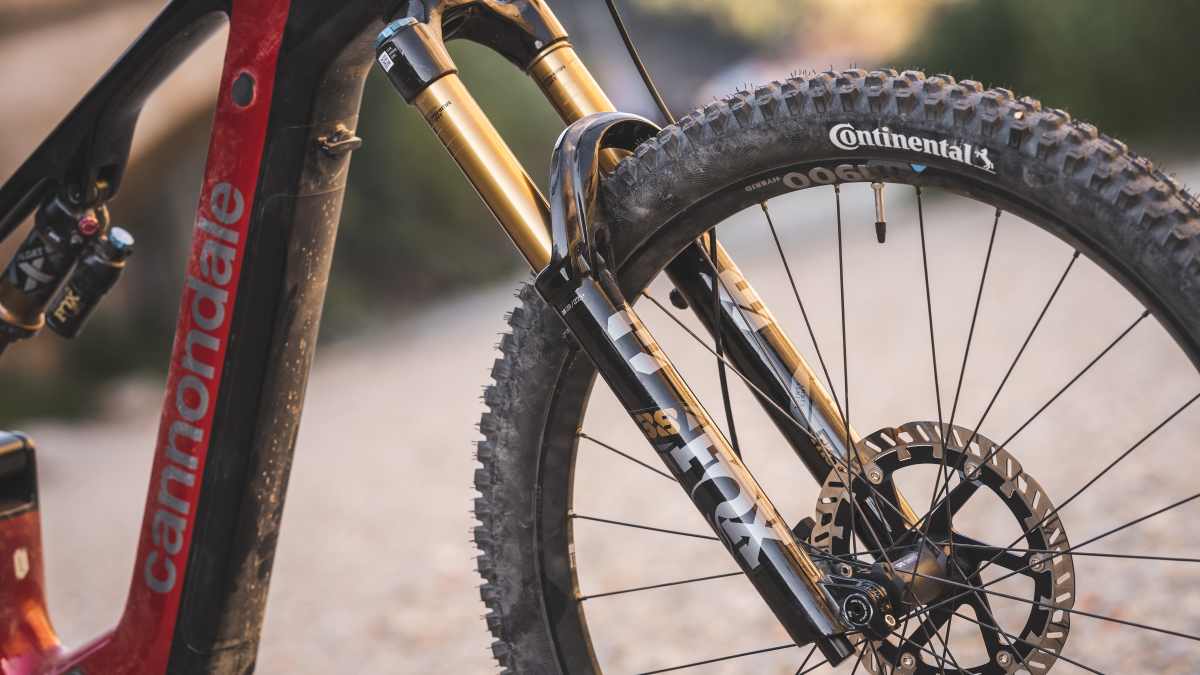
| Fork | Fox 38 Float Performance Elite |
| Rear shock | Fox Float X Performance Elite |
| Drivetrain | SRAM GX Eagle Transmission AXS |
| Front brake | SRAM Code Bronze |
Cycling without limits – the Rail+ makes it possible. That’s more or less the advertising slogan for Trek’s Bosch All-Mountain bikes. And who could possibly resist that? Everyone wants to go higher, faster, further. To deliver on this promise, the Americans have spared no effort in designing the fifth-generation Rail so that absolutely everyone gets their money’s worth.
Geometry settings: spoilt for choice
Let’s start with the suspension: 160 millimetres of travel at the rear and front have proven their worth in this category. The ‘mullet’ wheel combination – with a 29er front wheel and a 27.5-inch rear wheel – has also done so. Progressive suspension characteristics for more support, or a more linear response for greater comfort? Thanks to the flip chip on the lower shock mount, the Rail+ is designed to cater to both preferences.
Depending on the position of the Mino-Link – as the second flip-chip on the shock rocker is called – the head angle and bottom bracket height change. The flatter setting brings out greater stability in the Trek, whilst the steeper setting improves climbing performance and emphasises the bike’s playful nature.
For those who still haven’t found the perfect setup, Trek offers a second option to adjust the head angle by a full degree flatter or steeper – this time without specifically altering any other geometry parameters. This is achieved via a separate, eccentric bottom bracket shell.

Great value for money: the price-performance ratio looks promising
So much for the adjustment options. But the chassis itself also has plenty to offer. For €7,499, the main frame, rear triangle and even the shock cradle are made of carbon. Combined with the in-house Bontrager carbon wheels, also made of carbon fibre, this pays off in terms of the bike’s overall weight. Despite the removable 800 Wh Powertube battery, our lab scales recorded a weight of 23.9 kilograms for the size L model. Given the constraints imposed by the motor and the need to remove the battery, this is a respectable figure.
The rest of the spec offers excellent value for money by Trek’s standards: Fox suspension components from the high-end Performance Elite range and an SRAM GX drivetrain. It really does tick all the boxes. The only drawback: the SRAM Code braking system, which is now looking a bit dated. In an age when we’ve become accustomed to the brutal bite of the Maven range, the braking power of the Code seems almost underwhelming, particularly on an e-bike. So there’s still some potential for tuning here.
The Trek Rail+ is a long-range all-rounder
The riding position is sporty. A steep seat angle, long reach and a flat cockpit position the rider in a forward-leaning, slightly stretched stance across the frame triangle. Pressure on the front? Check! The in-house Bontrager tyres roll quickly. Add to that the durable Bosch drivetrain – and the Rail+ seems tailor-made for long, hard-pedalling rides.
With these geometry figures, the Trek should, in theory, have no trouble climbing even technical ramps. But in practice, things are different. The steeper it gets, the more the rear suspension travel is used up. There’s a lack of counter-support in the mid-travel, which causes the effective seat angle to tilt far backwards, resulting in a loss of control over the front end. At the same time, the ground clearance is reduced to such an extent that all test riders complained increasingly of pedal strikes on rough terrain.
Variable geometry: a silver bullet?
Given the huge potential for fine-tuning that lies dormant in the platform, our first thought was: the lack of climbing ability must simply be a question of the set-up. To give the bike a second chance, we fitted the shock in the more progressive setting and set the Mino-Link to ‘High’. Our hope was that a steeper head angle, a higher bottom bracket and more support would give the Trek a boost on the climbs. And that’s exactly what it did – albeit at the cost of significant compromises in terms of traction and safety on descents. In short: the Trek can handle long climbs on gravel or gentle trails, but when the going gets technical, it lacks the expertise.
In downhill cycling: distance is key. But how far does it go?
On descents, the Rail performs in a similar vein. The suspension feels comfortable and eagerly absorbs rocky sections and roots, whilst allowing you to maintain the ideal line with ease. However, if you want to launch yourself into the air off terrain edges or generate speed by applying extra body weight in bends or over bumps, the Rail+’s responsiveness leaves something to be desired. This is because a lot of energy is lost in the comfort-oriented suspension.
At first glance, the geometry seems just right. The long reach, combined with the low bottom bracket and the long rear end, keeps the bike firmly on track. As they say, length pays off. On steeper descents, however, the Trek takes you out of your comfort zone more quickly than its smooth-riding geometry might initially suggest. This is down to the long reach combined with the low front end. As a result, the Trek gives you the feeling of standing over the cockpit rather than sitting securely behind it when riding downhill. This makes handling more difficult, you’re more likely to feel as though you might tip over, and your arms tire more quickly. Trek has therefore failed to deliver on its promise. Cycling without limits? Not a chance – at least not as long as very steep terrain features on the tour route.
Rating: E-All-Mountain category
positive:
- top-of-the-range features
- comfort-tuned suspension
- smooth-running geometry
- long warranty
negative:
- loud background noise when going downhill
- sluggish handling
- Not a bike for very challenging trails

Max Fuchs
Editor