


The best of both worlds: Minimal-assist bikes: Threatened with extinction – but why on earth?
Laurin Lehner
· 31.08.2026

The idea is simple: a small motor, a small battery, low power – but in return, low weight and genuine ‘biobike’ handling. The best of both worlds, so to speak. For me, it was the most logical thing in the world right from the start. The most sensible way to ride an e-bike. Because with these lightweight e-MTBs, the very thing I’ve hated about cycling for a good 30 years disappears: huffing and puffing your way up a steep ramp with a red face and jerky pedalling movements. And best of all: the weight stays under 20 kilos – close enough to a bike without a motor. So it’s cycling with the legs of Tom Pidcock, but without a moped under your bum. What more could you want?
Whether a bike weighs 15 or 16.5 kilos – the difference is noticeable, of course. But those same 1.5 kilos beyond the 20-kilo mark make an even bigger difference. An e-bike weighing 21 kilos and a minimal-assist bike weighing 19.5 kilos feel like night and day when riding on the trail.
That is why the ‘minimal assist’ concept is so compelling
Let’s take classics such as the Tremalzo or the Holy Hansen in Latsch. If you want to go high, you have to suffer – we’re talking over 1,000 metres of elevation gain, agony included. Whilst my colleagues celebrate this masochistic experience with religious fervour and rave about how their lactate dances in their veins, I find it quite simply: daft. Because a) I’m completely out of shape, and b) I arrive at the top of such steep climbs so knackered that I can barely enjoy the descent – which pretty much calls the whole exercise into question.

Why not a standard e-bike with a powerful motor?
Sure, with a normal e-bike, the whole thing’s even quicker and easier – but that’s not the point at all. I want to work up a sweat; I want to go mountain biking. But with a bit of assistance – preferably in Eco mode. And please with a whisper-quiet motor, because I still want to hear the pebbles crunching under the tyres and the birds chirping.
I’m a rubbish visionary
A few years ago, I was absolutely convinced that these ‘light’ e-MTBs would catch on amongst mountain bikers – certainly by the time this category was introduced with what was then the benchmark model, the Specialized Levo SL. It weighed in at around 18.5 kilos, at least in the more expensive version. It was obvious to me that the hype surrounding these heavy, power-packed e-bikes would quickly fizzle out. Because I believed that at some point it would dawn on people: ‘Yes, it’s all very cool – but what about that mountain-biking feel? That’s gone for good.’
2026 – A lull in new releases for minimal-assist bikes
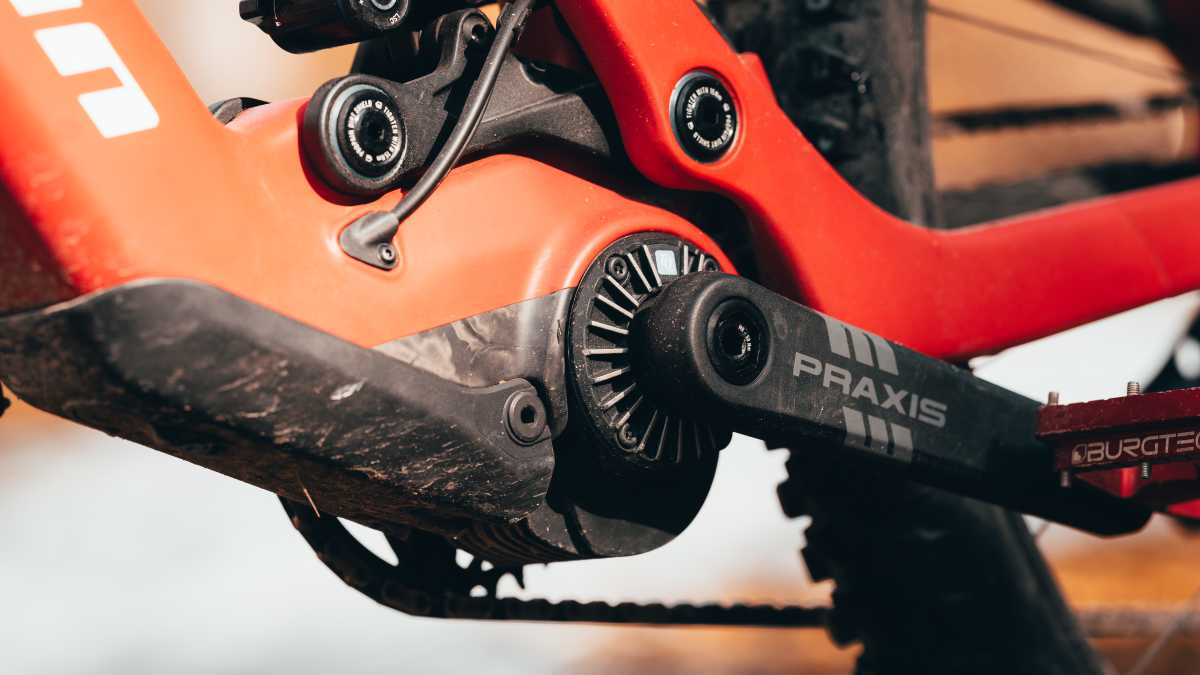
It’s 2026, and hardly any manufacturers still offer models like these. New minimal-assist bikes? Not a chance. Fortunately, there are still a few models available. Last year, I ordered the Propain Sresh SL as a long-term test bike. With the TQ60 minimal-assist motor and the small 360 Wh battery in the down tube, it weighs in at just 19.3 kilos – without pedals. This gives the Sresh SL plenty of ‘biobike’ character: bunny hops are still possible, changing line on a downhill is a breeze, and mountain rides are manageable even with minimal assistance. 1,200 metres of elevation gain? It’s doable.
Why did it fail?
Bike designer and visionary Peter Denk sums it up: “The category was simply marketed badly. Dealers find it hard to sell customers a bike that has less power and a shorter range – yet costs just as much”. A tricky sales pitch, as you can imagine.
Powerhouses such as Avinox and Co. are taking over
Sure, a powerful motor is great fun – especially when tackling steep climbs. There’s no doubt about the power. But it’s only really mountain biking to a limited extent. And yes, even full-assist bikes are getting lighter. But they’re rarely light enough. Because one or two kilos makes a huge difference. That’s just the way it is.
The bottom line is that the fascination with powerful motors continues, and the specialist magazines are hyping them up big time. The result is that bikes with minimal assistance are hardly in demand anymore.
So what now?
There are still a few models – the Specialized Levo SL, which Propain Sresh SL, the YT Decoy SN and a few others. But you can search high and low for new products and still come up empty-handed. As we all know, Fazua is a thing of the past. Will TQ bring another minimal-assist motor onto the market? It’s doubtful.
I want to carry on riding in the Minimal-Assist class – for as long as I can. After that, I suppose I’ll have no choice but to switch to the moped class. Or I might get myself another Biobike and finally start working seriously on my fitness. We’ll see.
What do you think? We look forward to hearing from you: please email me at: L.Lehner@bike-magazin.de
The Sresh SL: A quick overview of all the facts
- Engine: TQ HPR 60
- Battery: 360 or 580 Wh (optional)
- optional: Range extender with 160 Wh
- Suspension travel: 160/150 mm
- Wheel size: 29 inches or a mullet
- Weight: 19.1 kg (Test bike in size L with 360 Wh, 29-inch) / from 18.2 kg (manufacturer’s specification)
- Gross vehicle weight: 120 kg
- Price: from 5,994 euros, specifications can be customised


Laurin Lehner
Editor