


Whether it's rough gravel, technical terrain or the daily commute - Canyon promises maximum versatility for the new Grizl 7. We checked whether the affordable aluminium gravel bike really lives up to this claim.
BIKE summary of the Canyon Grizl 7
The Canyon Grizl 7 is also one of the top bikes in the aluminium class in 2026. With ample tyre clearance, a Shimano GRX groupset with double gearing and numerous mounting points, it covers a wide range of uses. If you're looking for a robust, affordable and versatile bike, this Koblenz all-rounder is a must-have.
Modern classic
When Canyon presented the Grizl as the "big brother" of the iconic Grail in 2021, there was a lot of scepticism: did the Koblenz-based company's portfolio really need another gravel bike? But the course of events proved the Canyon strategists right. Gravel sport has since diversified further, and while the Grail developed more and more in the direction of aero performance and racing character, the Grizl occupied the niche of adventure gravel biking. It was no longer about seconds, but about experiences, bikepacking and the ability to continue riding where others have to dismount.
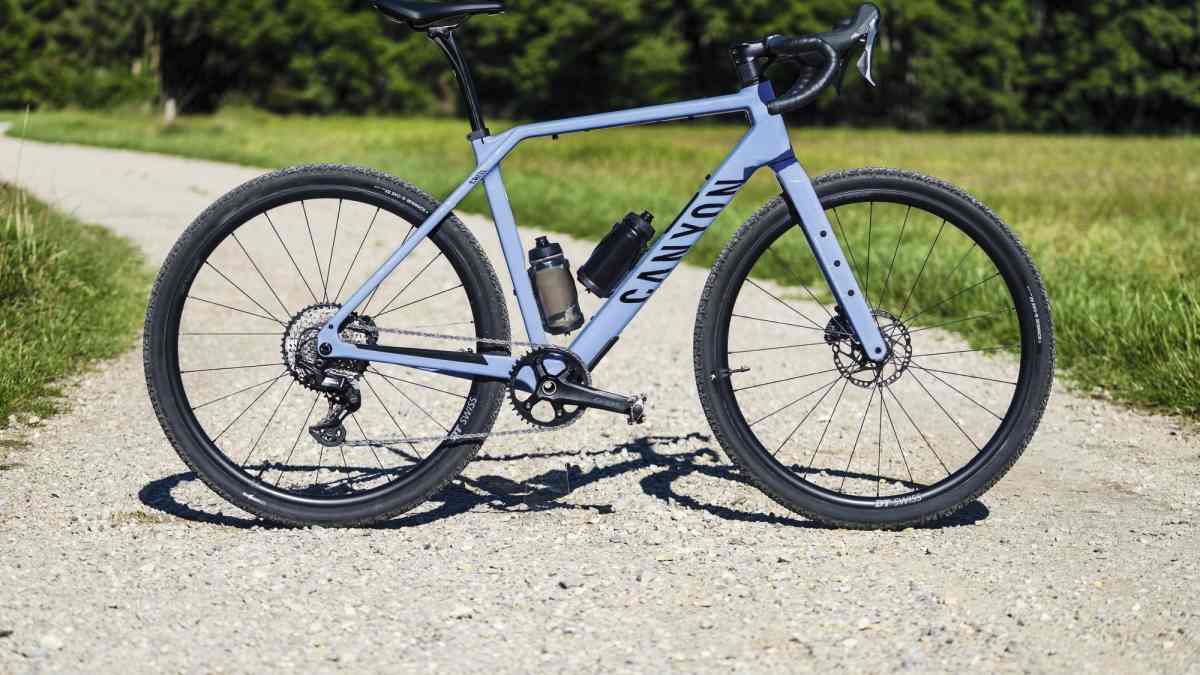
The Grizl 7 represents the spearhead of the aluminium models in Canyon's 2026 fleet. At a time when bikes often mutate into high-tech objects, the Grizl 7 has a reassuringly down-to-earth look - without being old-fashioned. The high-quality aluminium frame has been further refined for the current model year, and the geometry hits the sweet spot between smoothness and agility.
Compared to the early models, Canyon has mainly worked on the capacity of the 2026 Grizl 7. Tyre clearance is the buzzword of this season. With 50 millimetres between the fork legs and on the rear triangle, the Grizl is entering territory that was previously reserved for cross-country mountain bikes. The centrepiece of the equipment is the current Shimano GRX groupset. With a 2x chainring, twelve sprockets and precise mechanical shifting logic, it is a suitable choice for a bike that has to function even in the deepest mud, loaded on steep climbs and far away from specialised workshops. The hydraulic disc brakes of the GRX series offer maximum safety even with a full load - and the Grizl can take a lot of it thanks to its many mounting points.

The facts about the Canyon Grizl 7
- Price: approx. 1,799 Euro
- Frame material: Aluminium with full carbon fork
- Frame sizes: eight sizes from 3XS to 2XL
- Weight: 10.6 kg (size M, without pedals)
- Drive/gear shift: Shimano GRX, 2x, 11-36
- Brakes: Shimano GRX, hydraulic two-piston disc brakes
- Tyres: Schwalbe G-One, 45 mm width
- Impellers: DT Swiss Gravel LN
Sibling duel: Grizl 7 vs. Grizl CF 7
When faced with the choice, you inevitably end up with an internal comparison: Is the aluminium Grizl 7 model enough or is it worth paying more for the 2499 euro Grizl CF 7 made of carbon?
Visually, both bikes are extremely similar, but the main difference between the two models is hidden under the paintwork. The Grizl CF 7 shows its material advantage above all in terms of weight - around 640 grams separate the two rivals. But carbon is more than just lightweight construction in 2026. The Grizl CF 7 has the new integrated storage compartment in the down tube. A feature that is missing from the aluminium model due to its design. So if you want tools and spare parts to disappear out of sight in the frame, you have to go for the carbon model.
Another decisive factor is riding comfort. The carbon frame should dampen vibrations a little better, and the CF 7 also features the lightweight and shock-absorbing VCLS 2.0 carbon seatpost. For the drivetrain, Canyon relies on the GRX with single chainring and 10-45 cassette.
The price-performance assessment
This is where it gets exciting. The Grizl CF 7 is undoubtedly the more technically sophisticated bike. But if you calculate rationally, you will often end up with the aluminium Grizl 7. Despite a difference of 700 euros, the aluminium model offers almost identical features. For bikepackers who strap their bags directly to the frame, aluminium is often the less stressful choice anyway, as you don't have to worry so much about chafing or even structural damage from tipping over. The Grizl 7 therefore offers the more honest price-performance mix. The CF 7, on the other hand, is the choice for bikers with high technical demands.
How the Canyon Grizl 7 rides
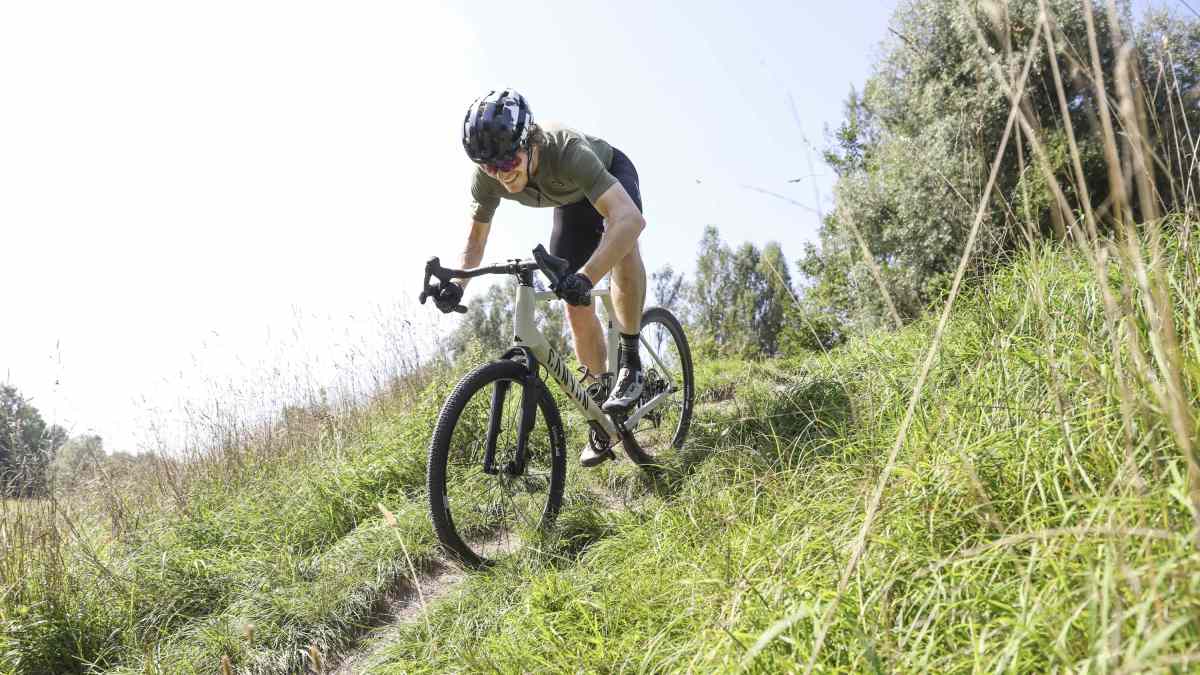
The riding experience on the Canyon Grizl 7 is significantly characterised by the realignment of the geometry, which is noticeable as soon as you take your first seat. The bike favours a significantly higher level of comfort, which is achieved by the relaxed frame and a shortened stem. The result is an emphatically upright position, with the centre of the handlebars having been raised by almost two centimetres compared to the previous model. Those who favour a more aerodynamic or sporty riding style will want to replace the stem with a flatter one. The wide handlebars also take some getting used to if you are coming from a road racing bike. In terms of riding dynamics, the focus is clearly on stable directional stability. Thanks to the longer wheelbase and slacker steering angle, the Grizl is designed to simply roll over obstacles and potholes instead of nimbly round them. On easy terrain, this makes the bike a little less lively and manoeuvrable, but as soon as the terrain becomes more demanding, it really comes into its own. On rough descents, the bike is extremely stable and stable on the piste without any unrest.

Josh Welz
Editor-in-Chief
