


Gravel bikes with 32 inch wheels. Or: Attack of the wagon wheels. An experiment.
Dimitri Lehner
· 26.05.2026


One bike comes from Italy, looks like an espresso on speed and rides like one too. The other looks as if someone has secretly implanted monster truck genes into a gravel bike. 32 inches instead of 28 - more wheel is currently not possible. We did the self-experiment: Laurin on the futuristic Chiru Veldt Titan giant bike, Dimi on the racy Wilier - and vice versa! And suddenly even gravel feels ideological.
Curiosity: What is that?
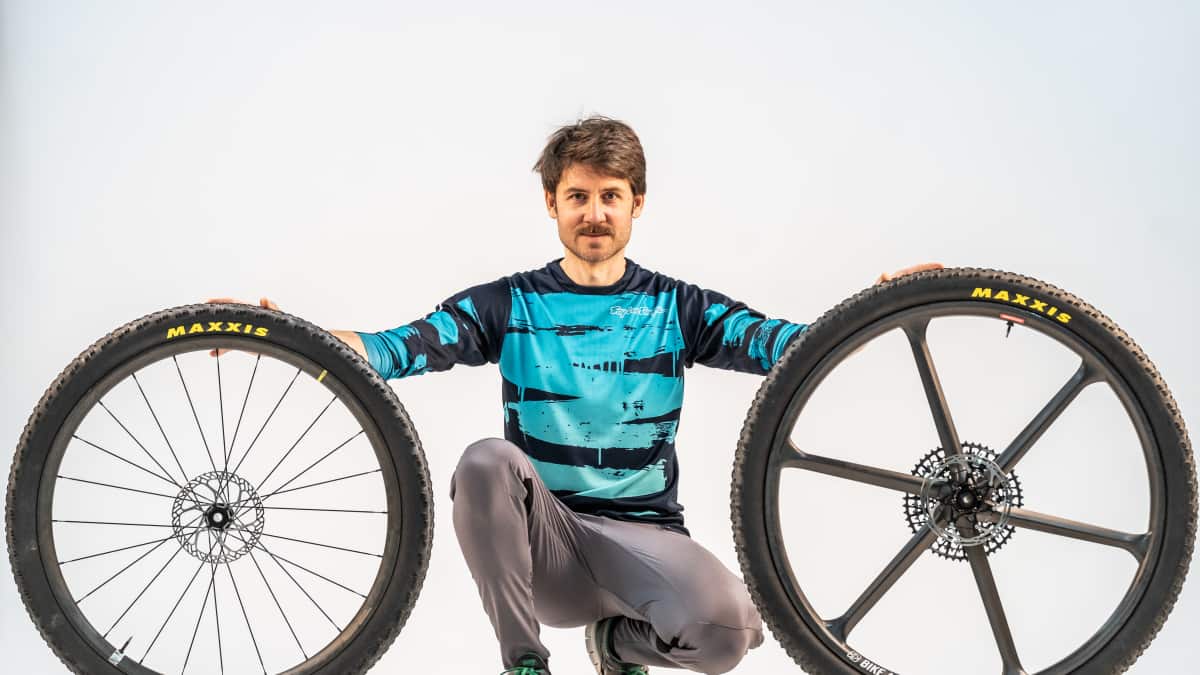
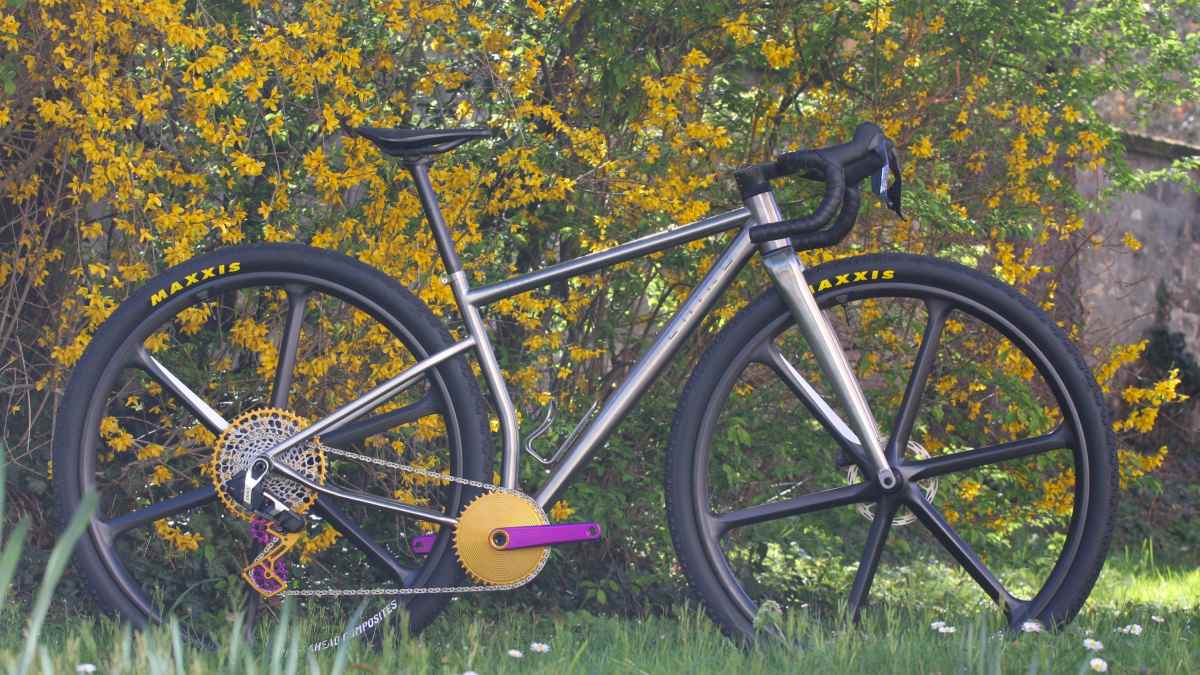
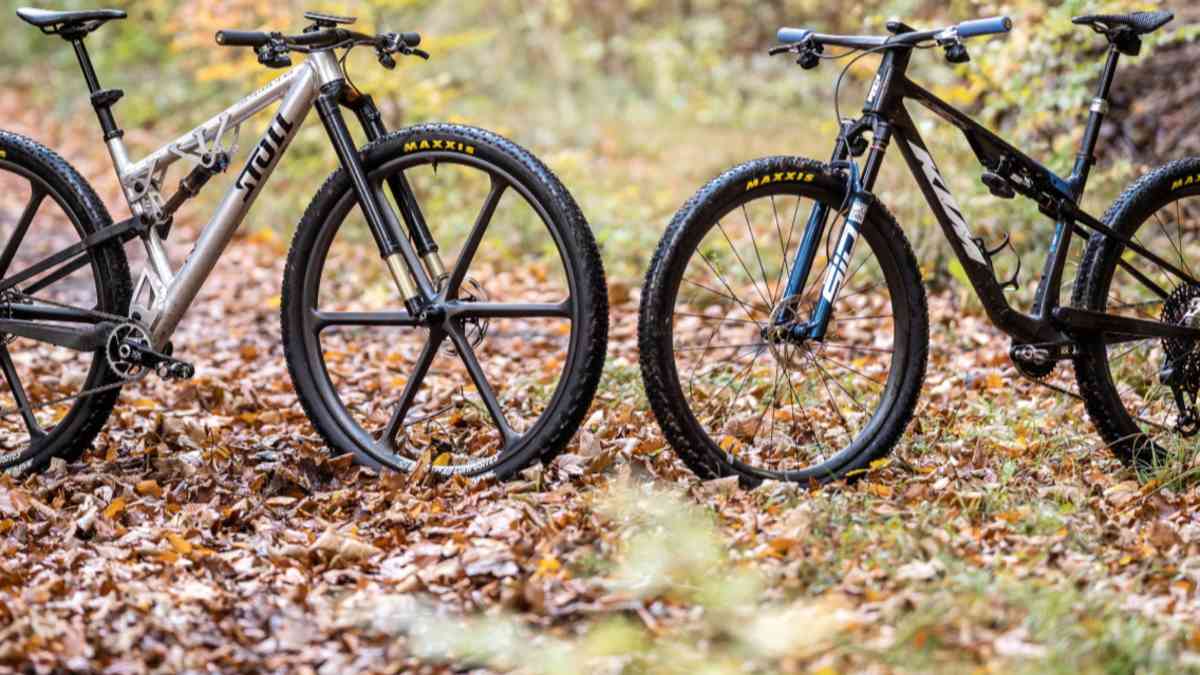
Dimitri: Of course, I had long heard about the 32-inch hype. The occupational hazard of bicycle journalism. In the spring, there was already an enduro prototype on YT: 32 inches at the front, 29 at the rear. In the past, you would have said: thrown together. Shortly afterwards, the first 32-inch gravel bike rolled into our test cellar. A Chiru Veldt made from titanium. Huge carbon wheels from Bike Ahead Composites, huge tyres, huge appearance. Even when stationary, the thing looks as if it could roll over toddlers and kerbs alike.
Laurin: I still remember the first 29er mountain bikes very well. That must have been in 2011. Back then, I thought the big wheels were absurd. Today, 26-inch bikes look like children's bikes to me. That's how standards shift. The 32-inch Veldt bike from Chiru also looks strange at first. As if someone had clamped a filigree titanium frame between two millstones. But that's exactly what makes it so appealing. You look at it. And for longer than would be polite.
The comparison bike: Wilier Rave
Laurin: For me, the Wilier Rave is one of the most beautiful gravel bikes on the market. Italians can do many things. Espresso. Opera. Tailor-made suits. And bicycles. Wilier has been building racing bikes with passion and slight arrogance since 1906. The Rave doesn't want to roll leisurely along the lake either. This bike demands speed. It craves an attack. Racing bike DNA meets gravel lust. Despite the race focus, tyres up to 52 millimetres fit inside. Nevertheless, the 50 mm tyres look almost ascetic against the 2.1 inch rollers of the Chiru Veldt.

Dimitri: The Wilier is probably not even the ideal comparison bike. It's too much of a racer for that. An adventure gravel bike would have been fairer. But that's exactly what I like about this duel. The Wilier embodies everything I love about gravel: light-footed, explosive, fast. A bike like a cheetah in hunting mode. Only the wide tyres give away the fact that off-road is also allowed here.
Looking to the future?
Laurin: The bike industry constantly needs something new. First gravel. Now 32 inches. If you click through the Internet, you'll immediately find people calculating rolling resistance, inertia and gyroscopic effect like NASA engineers at a rocket launch. I'm only interested in all this to a limited extent. I believe in self-experimentation. Two wheels. Two brothers. Two opinions.
Dimitri: The development is actually logical. Mountain bikes got bigger because the technology got better. Road bikes, on the other hand, have always been large-wheeled because large wheels roll efficiently. Now road bikes are leaving the road and disappearing into the forest. So the evolution starts all over again. The exciting question is: Do 32-inch wheels really roll over obstacles as confidently as everyone claims? Will roots suddenly become decoration?
Into the gravel
Laurin: We roll along the Isar. Gravel, gravel, fine waves. The 32-inch bike beneath me. Or rather: around me. You don't sit on this bike, but rather in it. At first it rides surprisingly normally. Almost disappointingly normal. Until you realise how many people are staring. Other Gravellers look over furtively, as if I were riding past on a penny-farthing from the imperial era. Dimi on his beautiful Wilier, on the other hand, is of no interest to anyone. The fate of all stylish bikes: beauty is expected. Monstrosity is not.
Dimitri: Riding the Wilier on gravel feels fantastic. Out of the saddle - and the thing shoots off like an F-18 fighter jet on an aircraft carrier. The 32-inch bike initially seems a little sluggish compared to this liveliness. It's just physics. Large wheels have more inertia. But as the speed increases, the impression changes. The Bike Ahead runs stoically straight ahead, calmly and majestically. Like a long-distance steamer. In shipping they say: length runs. Apparently this is also true for bikes. I feel like my compatriot, Karl von Drais from Baden, on his running machine: one wheel in front, one wheel behind, me in the middle.
Into the terrain
Laurin: Then we turn off onto the Isar trails. Roots, rocks, tight bends. Actually mountain bike terrain. This is where the giant front wheels should shine. And indeed: the Chiru Veldt rolls over obstacles as if they had lost their aggressiveness. More comfort. More traction. More composure. For a moment, I feel like the driver of a monster truck. Only in tight bends does physics show its second side. The large wheels demand a lot of pressure. If you don't steer bravely, you lose.
Dimitri: What I'm doing with the Wilier right now is bordering on abuse. This bike belongs on fast gravel, not on rough trails. The ground distributes blows like Conor McGregor in a title fight. Of course, the 32-inch bike is superior here. The thick tyres smooth a lot of things out. Nevertheless, the question remains: Does a gravel bike really have to be able to do everything? Some people also row across the Atlantic. That doesn't make it sensible.
The question of meaning
Laurin: Mountain bikers were already discussing this question twenty years ago. Back then, full-suspension bikes were created because nobody wanted to be kicked in the back. So why should we go back to riding unsprung through the gravel today - just because the handlebars are now curved?
Dimitri: I love gravel bikes because they mean freedom. Forest paths instead of main roads. Peace and quiet instead of traffic. But real terrain? That's what mountain bikes are for. And that's a good thing.
Our judgement
Laurin: 32 inches offers real advantages: more comfort, smoother running, better rollover. At the same time, inertia increases. Accelerating costs energy, as does turning in. Large wheels require smaller chainrings and larger brake discs. No advantage without side effects. Nevertheless, my prediction is: 32 inches will come. Not necessarily because we need it. But because the industry has decided that we need it.
Dimitri: The advantages really surprise me. The decisive factor, however, is the weight. Heavy 32-inch wheels would be like riding a concrete mixer. The sinfully expensive carbon wheels from Bike Ahead save the concept. Nevertheless, I'm sticking with 28-inch wheels for the time being. And what if in five years' time all gravel bikes only roll on 32-inch wheels? Then I'll ride a 32-inch bike too, according to my philosophy of life: The main thing is movement. The main thing is a bike.

Dimitri Lehner
Editor