


With the CarboKev, Australian manufacturer Curve Cycling is opening a new chapter in high-end gravel construction. Developed and manufactured in Melbourne, the frame combines carbon and titanium in an unusual way - and is aimed not only at maximum emotional excitement, but also at a well-heeled group of buyers. But there is more behind the spectacular mix of materials than just a show bike: the CarboKev is the result of intensive development work, numerous tests and a clear philosophy.
Curve CarboKev gravel bike in detail
- Area of application: Gravel
- Frame material: carbon / titanium
- Available sizes: XXS / XS / MD / LG / XL / XXL
- Price: from 29,000 Australian dollars (approx. 21,658 euros)
- Weight: n.a.
- Special features: Carbon-titanium hybrid frame, custom geometry, equipment and paintwork possible
Material mix with a system
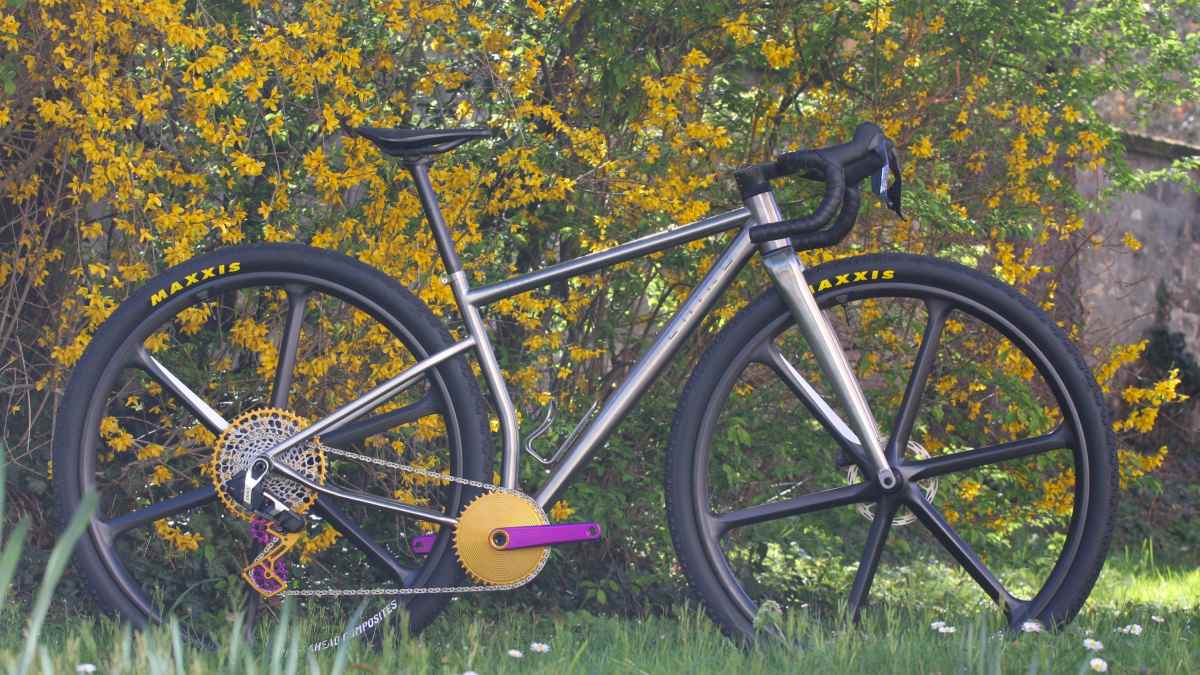
The centrepiece of the CarboKev is its hybrid construction of carbon tubes and 3D-printed titanium structures. While many manufacturers rely on pure materials, Curve takes a differentiated approach: "The right material in the right place". The frame is deliberately divided into two functional zones:
- Stiffness Zone: The down tube and chainstays are made of carbon and are designed to ensure maximum stiffness and efficient power transmission.
- Comfort Zone: The titanium top tube and seat stays offer vertical compliance and are designed to increase long-distance comfort.
As a result, Curve promises noticeably stiffer riding behaviour in the drivetrain without completely sacrificing the compliance typical of titanium. According to the manufacturer, the frame also weighs around 250 grams less than comparable titanium models, although saving weight was not the primary development goal.

High-tech from the 3D printer
The 3D-printed titanium lugs, which serve as connecting elements between the carbon tubes, play a key role. These not only enable complex shapes and precise material distribution, but also a targeted coordination of stiffness and durability.
The connection is made using complex bonding processes with so-called double-lap joints, which are designed to ensure a particularly large contact surface and high structural integrity. According to Curve, this construction method was specifically designed for durability and resilience under extreme conditions.
Overall, the Curve CarboKev is not intended to be a classic gravel bike, but a technological experiment with clear racing DNA. The combination of carbon and titanium is nothing new - but the consistent functional separation of the materials and the realisation using 3D printing and complex bonding technology remains something special.
Extremely tested, uncompromisingly developed
Curve describes the CarboKev gravel racer as the most intensively tested model in the company's history to date. The frame had to undergo numerous stress tests, including laboratory tests according to industrial standards as well as real-life extreme stresses with repeated reworking, grinding and re-bonding of individual areas. With this intensive development phase, the Australian label wants to emphasise its claim to set a new benchmark in the hybrid frame sector - particularly with regard to structural safety and durability.
Race DNA with modern gravel standards
Geometrically, the CarboKev is clearly designed for speed. A low front end, combined with wide tyre clearances up to 29 x 2.2 inches, shows the focus on modern gravel racing. Other features include fully integrated cable routing, race-oriented geometry, which can also be customised based on bike fitting data, and compatibility with current drive standards.
Manufacturing: Manual labour meets global supply chain
Despite its high-tech aspirations, the Curve CarboKev frame remains a handcrafted product. Development, alignment, bonding and finishing take place in Melbourne. Individual components - such as titanium parts or carbon tubes - come from specialised partners, but are processed in-house. This approach promises not only a high level of quality control, but also extensive customisation options for customers.
Eye-catching design with cult factor
In addition to the technology, Curve also makes a visual statement: the standard "Splatter" paint finish is inspired by the aesthetics of 90s sneaker culture and makes each bike unique. Customised paint finishes are of course also possible. In view of the high price, however, the Curve CarboKev gravel bike remains an exclusive niche product - and that is probably part of its appeal.
Conclusion
When I saw the Curve CarboKev for the first time, my coffee cup almost fell out of my hand. You don't find such an exciting gravel bike on every corner. The sweetly expensive Cutsom pearl from the other side of the world has burnt itself deep into my brain. Technically and visually, the Curve CarboKev is definitely one of the most exciting gravel bikes on the planet. - Jan Timmermann, BIKE editor


Jan Timmermann
Editor