


MTB Helmet Buying Guide: How to find the best mountain bike helmet for your needs
Stefan Frey
· 09.08.2026


How much protection does a cycle helmet actually offer?
A cycling helmet is designed to absorb the energy of an impact, thereby reducing the strain on the skull. The hard outer shell disperses the force, whilst the foam core – usually made of expanded polystyrene (EPS) – deforms, thereby absorbing some of the impact energy. In this way, a helmet can prevent serious injuries such as skull fractures and certain head injuries in the event of a fall, or mitigate their consequences. However, a helmet does not protect against every accident and is no substitute for anticipatory riding or good riding technique.
It is also important to have the right expectations. A standard cycling helmet does not protect the neck or the face. Nor can concussions be reliably ruled out, as an oblique impact subjects the head to additional rotational forces.
In Europe, a mountain bike helmet intended for use on a bicycle must, as a minimum, comply with the requirements of the EN 1078 standard. Among other things, the standard sets out requirements relating to shock absorption, retention systems, field of vision and coverage. However, it represents a minimum requirement and is not an independent ranking of protective performance.

Some of the latest helmets comply not only with the European EN standard but also with other standards. CPSC stands for the Consumer Product Safety Commission and is the safety standard for cycle helmets required by law in the USA. The CPSC standard tests helmets using higher impact energies and greater drop heights than EN 1078. As a result, helmets must be capable of absorbing stronger impacts. An increasing number of trail and all-mountain helmets now also carry the NTA seal. The NTA 8776 – the e-bike standard – was originally developed for S-pedelecs with a top speed of up to 45 km/h and requires a higher impact energy absorption capacity as well as an extended protection zone at the back of the head.
What are the key criteria to consider when making a purchase?
When buying a mountain bike helmet, there are four key points to bear in mind:
- Fit
- Scope of application
- Scope of protection
- Comfort and ventilation
Only then should you consider weight, appearance and additional features. An expensive helmet that’s too tight or slips off is a worse choice than a cheaper model that fits securely and stays in place. After all, a helmet that’s too tight, chafes or slips off is more likely to be left at home when the time comes – and that can have incalculable consequences in an emergency.
The helmet should sit horizontally on the head and cover the forehead sufficiently. There is usually a gap of one to two finger-widths between the eyebrows and the rim of the helmet. When shaking your head, the helmet must not slip, even if the straps have not been tightened uncomfortably.
You should also never choose a size based solely on the centimetre measurement. Manufacturers use different internal moulds. A helmet with a circumference of 57 to 59 centimetres may fit perfectly from one manufacturer but cause pressure points with another. Therefore, you should always try on several models and wear the helmet for a few minutes.
How do MTB helmets differ?
Mountain bike helmets can be broadly divided into four categories. The distinctions between them are fluid, but the differences in the level of protection and weight are clear.
| Helmet type | Typical application | Strengths | Possible disadvantages |
| Cross-country helmet | Marathon, tour, fast climbs | Lightweight, very well ventilated, efficient | Less protection at the back of the head and on the temples |
| Trail helmet | All-mountain, technical tours | A good balance between protection, weight and ventilation | Slightly heavier than XC models |
| Enduro helmet | Downhill-oriented trails, bike park | Low at the back of the head, secure fit, often with a large visor | Heavier weight, lower air flow rate |
| Full-face helmet | Bike park, downhill, challenging races | Protection for the head, jaw and face | Heavier, warmer and less versatile |
Cross-country helmets are designed for light weight and maximum ventilation. They usually fit snugly on the head and feature plenty of large vents. They are particularly comfortable and well-ventilated for long climbs and fast rides.
Trail helmets They usually provide more coverage for the back of the head and the temples than lightweight XC models. They typically feature an adjustable visor, a more robust construction and well-balanced ventilation. For many mountain bikers, this type of helmet is the most versatile option. It works just as well on day trips as it does on technical natural trails.
Enduro helmets are designed for riders who cycle uphill but want as much protection as possible when riding downhill. The shell usually extends well down the back of the head, whilst the visor is larger and more robust. A special variant of enduro helmets are the so-called jet or three-quarter helmets. Like a full-face helmet, their shell extends far down the nape of the neck and covers the ears and part of the jaw. The only thing missing here is the chin strap. Compared to trail helmets, enduro models are often heavier and less ventilated.
A full-face helmet It also protects the chin and face. It is the first choice for downhill, freeride, challenging bike parks and trails with big jumps. Some models feature a detachable chin guard unit or can be combined with a separate chin guard. Such systems increase versatility, but do not always match the level of protection offered by a classic downhill full-face helmet.
Why are there such big differences in price?
MTB helmets cost between around 50 and several hundred euros, depending on the model and features. However, the price alone does not indicate how well a helmet protects against every conceivable impact. An inexpensive but heavy helmet may, under certain circumstances, even achieve better results in laboratory tests than a more expensive and lighter helmet.
More expensive models often feature a more sophisticated design. These include, for example:
- In-mould manufacturing with a precise bond between the shell and the foam core
- Different foam densities
- Rotational protection systems (e.g. MIPS)
- Lighter reinforcements
- High-quality fitting systems
- Better and more durable padding and straps
- More precise ventilation ducts
- Replaceable or washable inner cushions
In the case of very lightweight helmets, a great deal of development work also goes into the design. Weight savings are often achieved through optimised foam moulds, thinner shells and sophisticated reinforcements.
An affordable helmet can meet the basic safety requirements and still be a good choice. It’s worth paying a bit extra, particularly if the fit, comfort, ventilation, weight or additional protection make a significant difference in everyday use. The key thing is that the helmet is certified, undamaged and fits properly.
Can I check how good the ventilation is before I buy it?
When it comes to ventilation, marketing departments really hit their stride: “Air Flow Channeling”, “Flow-through Ventilation” – and who knows what other names these systems go by. The fact is: it’s difficult to properly assess ventilation in-store. It depends heavily on speed, outside temperature, hair volume, etc. Nevertheless, there are a few pointers that allow for a good assessment. It’s not just the number of vents that matters. A helmet with lots of holes may be less well ventilated than a model with fewer, but better-designed, channels. Air must be able to enter at the front, be channelled over the scalp and exit at the back. If, whilst you’re still in the shop, you get the feeling that air is getting trapped inside the helmet, it’s best to give it a miss.
When trying them on, bear the following points in mind:
- Are the front openings big enough?
- Are there any visible air ducts inside?
- Are there any cushions or reinforcements situated directly in front of key openings?
- Is the helmet fitted in such a way that air can flow over your forehead?
- Can the visor be adjusted so that it doesn’t block the front vents?
Wear the helmet for ten to 15 minutes with your eyes closed, moving your head slightly as you do so. Pressure points and areas of excessive heat often only become apparent after a while. Even better is to take it for a test ride with the option to return it.
Straps and fastenings – what should I look out for?
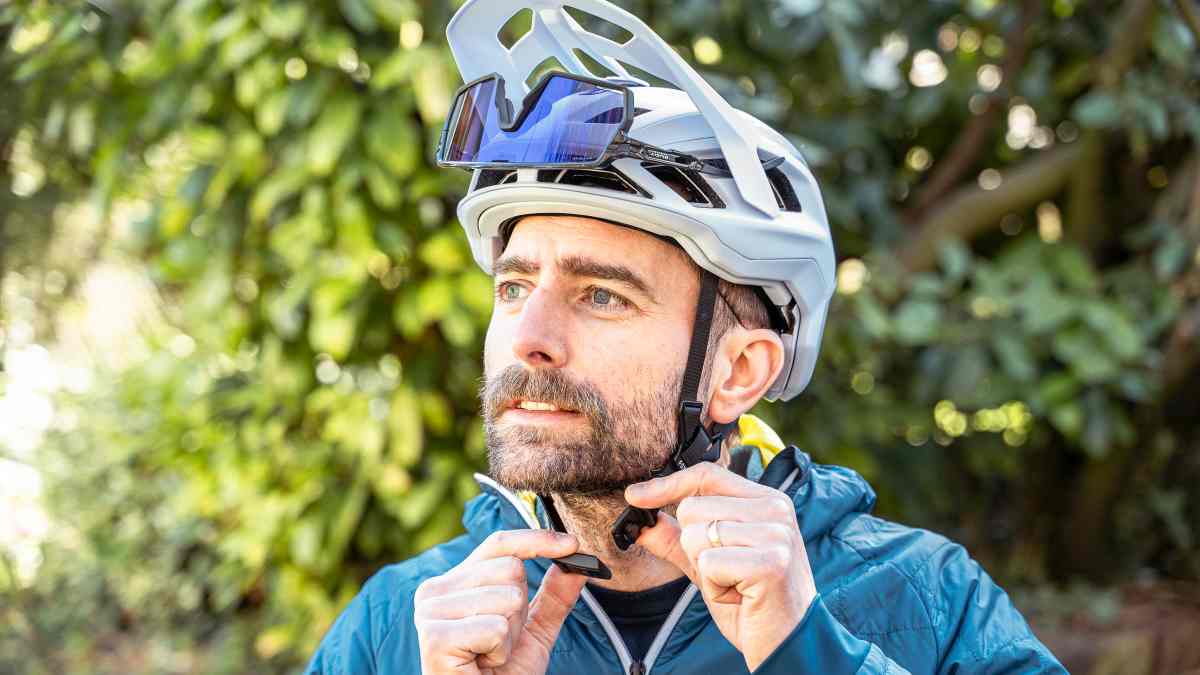
Even the best protection system won’t work if the helmet doesn’t stay securely on your head. The side straps should be easy to adjust and form a neat ‘V’ shape below the ears. The adjuster must not move of its own accord whilst riding. The chin strap should fit snugly but not be too tight. As a guide, there should be enough space for about one to two fingers between the strap and your chin. Various fastening solutions have become standard:
- Traditional snap fastener: reliable, lightweight and widely used
- Magnetic fastening: is quick and easy to use, even when wearing gloves
- Ratchet or twist lock: enables precise adjustment
A magnetic fastening is not automatically safer than a conventional clip fastening. What’s more important is a sturdy construction, a smooth strap guide and the ability to adjust the system correctly. Also, check whether the fastening presses against your larynx whilst riding. Even slight pressure points can become uncomfortable on long rides.
MIPS and the like – what do rotational systems actually offer?
Falls do not follow a set pattern, and certainly not in the same way as a standardised impact in a TÜV test. If the head strikes the ground at an angle, rotational movements occur. These forces can put strain on the brain and are linked to certain types of brain injury. Traditional helmet standards focus primarily on linear impact absorption and only account for rotational movements to a limited extent.
Rotational systems are designed to reduce this stress. MIPS uses a low-friction inner layer for this purpose, which can move to a limited extent relative to the helmet in the event of an oblique impact. Other systems utilise special foam structures, elastic elements, sliding surfaces or multi-layered internal constructions.
Laboratory tests show that rotational systems can reduce rotational acceleration under certain test conditions. However, the results vary depending on the technology, helmet shape, angle of impact and test procedure. The presence of the MIPS logo therefore does not automatically guarantee better protection in the event of a fall.
In terms of the purchasing decision, this means:
- A rotation system is a useful additional safeguard.
- It’s no substitute for a good fit.
- Not every system performs equally well under all conditions.
- Comfort, coverage and secure fastening remain just as important.
If you have a choice between two helmets that fit equally well, you can use a rotation system as a useful deciding factor. However, MIPS does not turn a poorly fitting helmet into a good one.
What useful features do helmets have?
These days, a mountain bike helmet can do much more than just protect your head. Some features enhance comfort, whilst others make it more practical for everyday use. We’ve tried to rank the various features according to their usefulness.
Adjustable visor
A height-adjustable visor protects against the sun, low-hanging branches and flying debris. It is important that it fits securely and does not rattle in your field of vision. Anyone who frequently wears spectacles or goggles should check whether the visor can be raised high enough. In the event of a fall, the visor should detach from the helmet so as not to pose an additional risk of injury.
Height-adjustable fitting system
A height-adjustable neck support can be a real game-changer when it comes to comfort and a secure fit. Depending on the position, the adjustment dial may or may not press against the back of your neck.
Washable inner cushions
Sweat, dust and sun cream take their toll on the upholstery. Removable and washable upholstery makes maintenance easier and ensures long-lasting comfort. Replacement upholstery should be available.
Insect screens
Until a few years ago, this feature was found on most high-quality helmets. Today, only a few models are still fitted with an insect screen. It’s a shame: hardly any other detail offers such great benefits whilst adding so little extra weight.
Goggle and spectacles holder
A rubberised section or indentation at the back of the head prevents the headband from slipping during slow passages. Glasses holders at the front or back can also be useful. The key thing is that the glasses do not press against the padding and can be stowed away securely.
Integrated rear light
A rear light improves visibility in low-light conditions. It is not a substitute for the compulsory bicycle lights, but can be a useful addition when cycling on the road and on dark driveways.
Camera or accessory mounts
A sturdy mount can be useful for certain applications. However, additional attachments alter the weight and may introduce undesirable forces in the event of a fall. Only use systems specified by the manufacturer and do not attach hard objects to the helmet using improvised solutions. In the event of a fall, the mount must detach from the helmet so as not to pose a risk to the wearer.
Ponytail compatibility
For riders with long hair, an opening at the back of the helmet can significantly improve comfort. However, this must not cause the helmet to sit loosely. Your hairstyle should not interfere with the fit.
How do I find the right helmet for me?
Choosing the right helmet starts with your own riding profile. First, ask yourself where and how you ride:
- Do you mainly go on long rides with a lot of elevation gain?
- Do you often ride on technical trails?
- Do you ride in bike parks or on downhill trails?
- Do you wear goggles?
- Do you wear glasses?
- Do you still cycle when it’s really hot?
- Is a low weight particularly important to you?
Next, measure the circumference of your head using a tape measure. The tape measure should be placed just above your eyebrows and around the widest part of the back of your head. The measurement you take is only a starting point. You’ll only know the actual fit once you’ve tried it on.
Put the helmet on without tightening the straps straight away. It should fit evenly and not cause any specific pressure points. If it feels tight against your forehead, the inner shell may be too round. If the pressure is on the sides, the shape may not suit your head.
Next, check that it is stable:
- Tighten the adjustment ring so that the helmet sits securely.
- Adjust the side straps below your ears.
- Fasten the chin strap.
- Open your mouth wide.
- Move your head to the left, right, up and down.
- Check whether the helmet slips or tilts down onto your forehead.
The helmet shouldn’t wobble or feel uncomfortably tight. If you feel like taking it off after just a few minutes, it’s unlikely to get any better on a four-hour ride.
How do I look after my helmet properly, and what can damage it?
An MTB helmet requires little maintenance, but it is important to clean it properly. Sweat, dust and mud can usually be removed with lukewarm water and mild soap. The inner padding should be removed and washed by hand, provided the manufacturer permits this.
Avoid aggressive cleaning agents, solvents, petrol, strong degreasers and products containing ammonia or bleach. Such substances can damage materials without leaving any visible traces. High temperatures can also damage the foam core and the plastic shell.
Please therefore observe the following rules:
- Do not leave your helmet in the car in direct sunlight.
- Do not dry on a radiator or with a hairdryer.
- Do not use any stickers or paints unless the manufacturer has approved them.
- Do not carry the helmet in your rucksack alongside sharp objects.
- Keep Velcro fastenings and zips away from the inner padding.
- Check the straps regularly for fraying and deformation.
- Allow the helmet to air-dry completely after cleaning.
The foam core must not be indented by hard objects. Minor scratches on the outer shell are not always a cause for concern, but cracks, deep nicks or loose joints certainly are.
How long can I use a helmet?
There is no standard timeframe for the lifespan of a cycle helmet. Factors such as the material, usage, UV radiation, sweat, temperature and care all influence how quickly it ages. The recommendation by many helmet manufacturers to replace a cycle helmet with a new one after just a few years of use leaves many cyclists feeling uncertain.
To find out how safe second-hand helmets are, we compared helmets aged between 6 and 9 years with new helmets that we had tested. Our sample of 18 helmets showed that the Shock absorption capacity has declined by an average of just 10 ghas. In short: Even older helmets are safe!
The condition of the helmet and the manufacturer’s recommendations are therefore crucial. Following a fall involving a blow to the head, the helmet must be replaced, even if no external damage is visible. The foam core may have become deformed or sustained minor damage that is not visible from the outside. This is precisely why safety authorities and manufacturers advise replacing a helmet following a significant impact.
It is also a good idea to exchange information if:
- The foam core shows signs of cracks or indentations.
- The outer shell is cracked or badly damaged.
- Belts may fray or become impossible to adjust securely.
- The fastening does not close properly.
- The adapter ring is no longer holding.
- The upholstery has become permanently hardened or is falling apart.
- The helmet slips, even though it’s adjusted correctly.
- The manufacturer specifies the end of the recommended service life.
A helmet that has been lying unused in the cellar for years ages differently from one that has been used every day in all weathers and under all conditions. Even so, a very old helmet isn’t really a good sparring partner. If you’re unsure, replacing it is the more sensible decision.
MTB Helmet Buying Checklist
Before you buy, you should check the following points:
- Is the helmet suitable for your intended use?
- Does it cover the back of the head and the temples sufficiently?
- Is it sitting level and won’t it slip?
- Do pressure marks start to appear after a few minutes?
- Can the straps and adjustment system be adjusted precisely?
- Does the fastening close securely?
- Is the ventilation adequate for your application?
- Does the helmet fit with glasses or goggles?
- Are replacement cushions available?
- Does the helmet have the appropriate safety marking?
- Was the helmet bought from a reputable retailer?
- Is there any visible damage, or is the age unknown?
Conclusion from the editor’s perspective
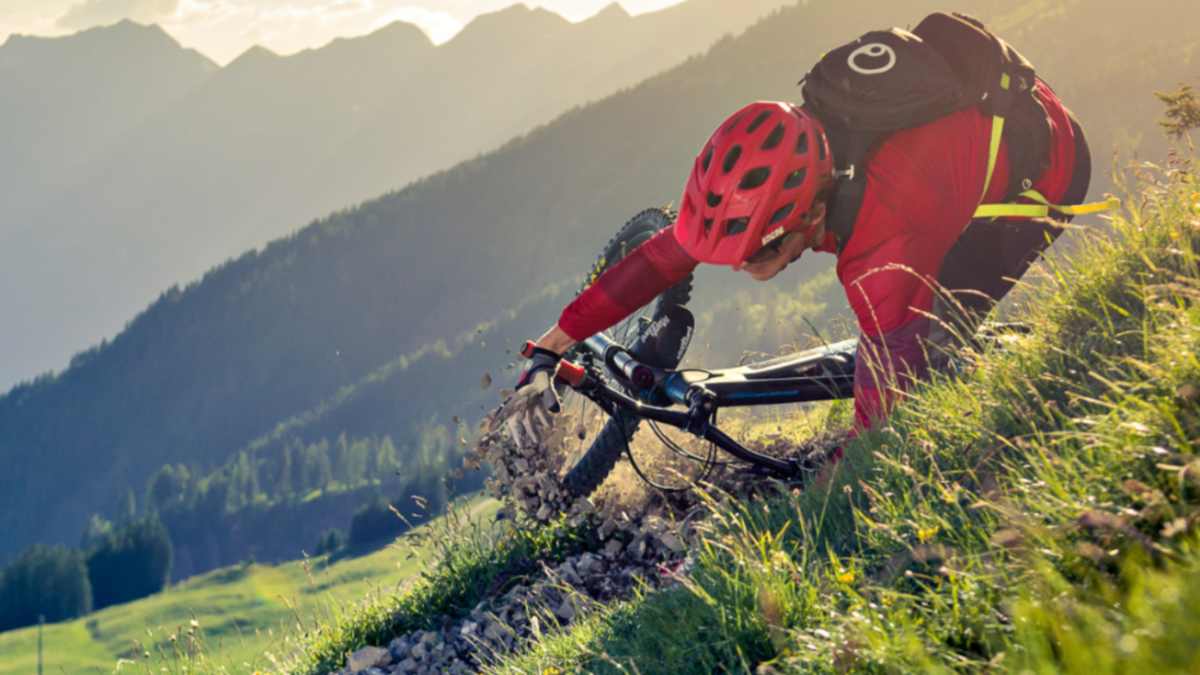
Wearing a helmet when mountain biking isn’t a question of skill, but a simple and effective safety choice. Even experienced riders don’t always crash because of a riding error. A wet trail, a hidden stone, a branch or an unfortunate slip can be enough.
When buying a helmet, therefore, the lowest price or the lightest weight should not be the primary consideration. The key factors are a good fit, adequate coverage, a secure fit and a reliable fastening system. These are followed by ventilation, comfort and features that suit your own riding style.
A rotational system such as MIPS can provide useful additional protection. However, it is no substitute for a good fit or a helmet suited to the intended use. Those undertaking long rides will usually benefit from a lightweight and well-ventilated trail or XC helmet. Those who regularly ride technical descents and in bike parks should prioritise deep coverage, stability and, where appropriate, a full-face helmet.

Stefan Frey
Editor