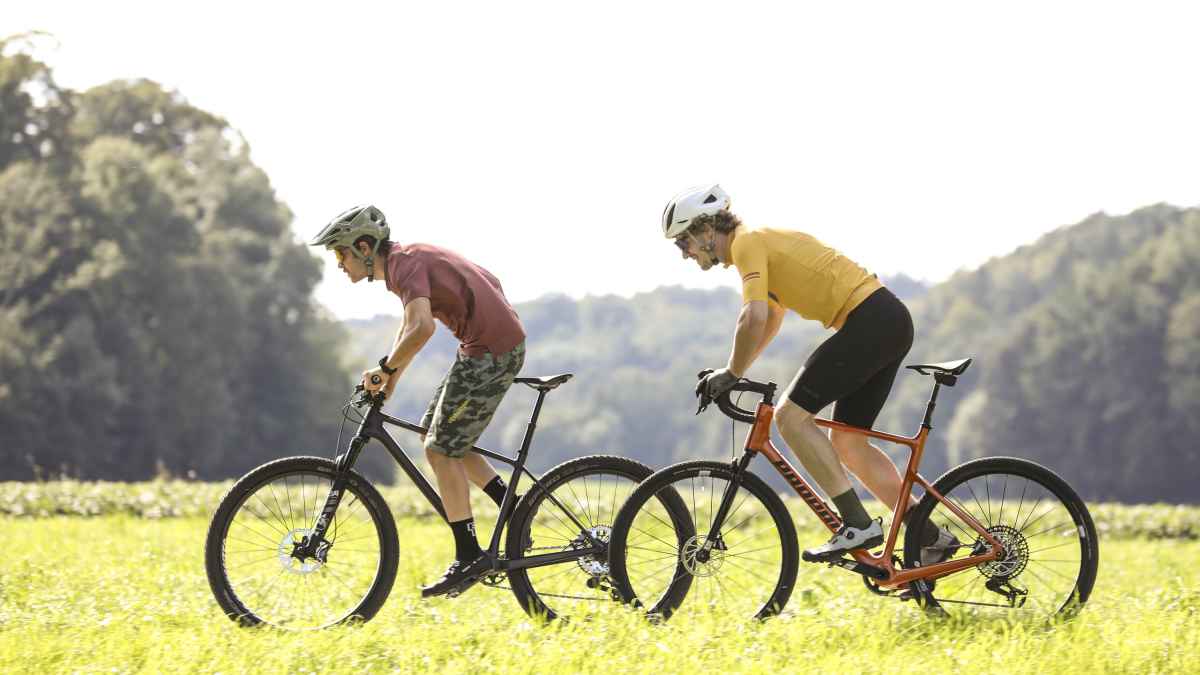
The bicycle industry lives by a simple principle: new colours every year, slightly different equipment, a new name - and suddenly the "new" model costs 200 to 400 euros more. The reality: in 80 per cent of cases, the differences compared to the previous year are purely cosmetic.
An example from practice: Cube has completed a huge technical revolution for the 2025 model year: the introduction of the Bosch CX Gen 5 motor and 800 Wh battery for e-bikes. As this technology is still brand new in 2026, many models for 2026 have barely been touched technically.
Let's take a look at the Cube Reaction Hybrid. Most of the variants (Performance, Pro, Race, SLX) were completely relaunched in 2025. The 2026 vintage mainly features new colours (such as solareclipse'n'bronze or smoke'n'black).
The technology check shows that both the 2025 and 2026 use the quiet Bosch CX Gen 5 (85 Nm) and options for the 800 Wh battery. So if you find a 2025 model in the shop, you will have exactly the same performance and the same motor as the 2026 bike, but you can pull the "previous year's joker" when negotiating in the shop.

How to recognise last year's models at first glance
Many manufacturers include the model year directly in the model designation, in their article numbers (often with the abbreviation MY for model year) or in the small print of the product description. So always ask explicitly: "What model year is this?" and not "Is this new?" Because even new goods that are two years old are technically "new.
Another method is that of the colour detective. Manufacturers change their colour range every year. To do this, go to the manufacturer's website and take a look at the current models. Then compare the colours with the dealer's range. A different colour often means that you are looking at a model from the previous year.
Proceed in a similar way with the equipment check: Components change minimally every year. Pay particular attention to gear groups, the fork generation or brakes. Use websites such as bike-discount.de or fahrrad-xxl.de - the products there often explicitly state "model 2025" or "previous year's model".
A look at the serial number, which ultimately reveals everything, is incorruptible. Usually embossed on the down tube or on the bottom bracket - format e.g: **WKG24**04567 (24 = 2023). For e-bikes, you will also find a similar breakdown in the motor/battery number. Ask the local dealer to show you the frame number. Reputable dealers have no problem with this.
The seasonal calendar: when you should strike
The bargain months of January and February
What happens? It's winter sales season and retailers want to empty their warehouses for new goods. There is also a need for liquidity after a quiet December. A 25 to 35 per cent discount is realistic. Negotiating strategy: "The bike has been here since August. The new models arrive in February. What can you offer me if I take it with me today?" Insider trick: The end of February is the sweet spot - dealers are most willing to negotiate just before the season picks up in March.
The dead zone - March to June
What happens? The peak season is approaching and now you have little room for negotiation. Last year's models are becoming scarce and realistic discounts range between 5 and 15 per cent, usually only on unpopular sizes. What's the best thing to do now? Take a test drive (without any pressure to buy!), identify the model you want, set a price alert and make a reservation for July/August.
The second big swing - July and August
What happens: New models are presented (for example at the Eurobike at the end of June). Dealers also receive initial information on new products. Now they know when the old goods have to go before the new delivery. The possible discounts increase to 20 to 30 per cent. Negotiation strategy: "I've seen that the 2027 model is coming in August. What price can you give me for the 2026?" Insider tip: Ask about pre-orders for new models. Dealers expecting a lot of new stock need to sell more aggressively.
The premier class in October and November
What happens: It's the end of the season and customers are dropping out. Retailers don't want to store over the winter because it costs money and space. They would much rather do good winter business (Christmas is fast approaching!) with clothing and accessories. The discounts go up to 30 to 40 per cent, sometimes even more for individual items. Negotiating strategy: "I am flexible with the colour and would also test two sizes. What is your absolute best offer for a previous year's model?" And the professional trick: At the end of October, ask: "Which bikes have to go by the end of the year? I'll pay cash and take it with me today." That can work wonders.
The search for leftovers in December
What happens: Now there are often only last-minute leftovers, often in unfavourable sizes and colours. But in return: maximum discounts of up to 50 per cent on what is still available! Who is it suitable for? People with unusual body measurements or no colour preference.
The 10 most effective negotiating tricks
- The information advantage.
What do you do? Do some research before the conversation: original price (RRP) of the model, prices of online competitors, prices of the successor model, differences between old and new.
What you say: "The successor model just has a different colour and costs €150 more. I see the 2025 online for €1,299. What can you offer me?"
Why it works: Retailers realise that they are informed and cannot be ripped off. - The instant take-away card.
What you say: "If the price is right, I'll take it straight away. I have the trailer with me / can take it on the bike rack."
Why it works: Saves the dealer effort, safe sale today instead of unsafe sale tomorrow and psychologically speaking: A done deal! - The cash bonus.
What you say: "I pay in cash / by EC card. What does that mean for the price?"
Why does it work? No credit card fees (1.5-3 per cent), immediate liquidity, retailers save on administrative costs. Please note: Cash payment only works for amounts up to €10,000 (Money Laundering Act), but this is generally irrelevant for bicycles. - The package strategy.
What you say: "I still need a lock, lights and a pannier. If you meet me at the bike, I'll buy everything together from you."
Why does it work? Higher total amount, accessories often have higher margins, customer loyalty.
Second variant: "I need another inspection after six months. Can we include that?" - The time-pressure method.
What you say (in October/January): "You want to have the warehouse empty by [end of month/end of year], right? What's your absolute last price?"
Why it works? You show understanding for the retailer's situation, appeal to mutual interest, time pressure is actually on the retailer. Best timing: The last week of the month works better (sales targets!). - The comparison technique.
What you say: "The comparable model at [competitor] costs 2,450 euros. Can you go with that?" Important: Only say if it's true (have a screenshot ready!), comparable model, not identical (otherwise it looks like blackmail). Stay friendly.
Why it works: Retailers don't want to lose customers to the competition. - The defect labelling (for demonstration bikes).
What you say: "The bike was a demonstration bike / stood in the window. There's a scratch on the frame. What does that mean in terms of price?"
Where do you look? Handlebar grips (wear and tear), saddle (seat recesses, scuff marks), pedals (scratches), paintwork (sunlight in the shop window). But fair play is required: only mention real defects, don't invent them! - The recommendation card.
What you say: "I regularly travel with a group / work at [company XY]. If the service is good, I would be happy to recommend you."
Why it works: Word of mouth is worth its weight in gold, Especially important in local shops, Long-term customer loyalty. Upgrade tip: Really recommend if the service was good (offer a Google review) and show it on your next visit. - The flexibility strategy.
What you say: "I am totally flexible in terms of colour and would also take frame size M or L. What do you have for discontinued models at the best price?"
Why does it work? You solve the retailer's size-colour problem, Retailer can choose from stock locations, Shows genuine buying interest - The silence tactic.
What do you do? After the first price offer: Say nothing. Just keep quiet and wait.
Why it works: People are uncomfortable with silence, salespeople tend to follow up, Psychological classic. Best timing: 5-10 seconds, then: "Is anything else possible?" Success rate? Surprisingly high!
The golden rules of negotiation
Negotiate correctly - the do's
- Remain friendly and respectful: Retailers are not opponents
- Give concrete figures: "I would like 1,200 euros" instead of "cheaper"
- Signalling willingness to buy: "I'll buy at price X"
- Be prepared to compromise: e.g. on colour, accessories
- Note the timing: Weekdays, afternoons (less busy)
- Speak to the person authorised to make decisions: "Are you the owner/managing director?"
Better not - Don'ts:
- Excessive haggling: demanding a 50 per cent discount is unrealistic
- Lies about competitor prices: often checked
- Becoming aggressive: destroys any basis for negotiation
- Badmouthing everything: "The bike has its pitfalls anyway"
- Fake time pressure: "I have to leave in five minutes."
- Threatening to return the product: unsympathetic and counterproductive
The BIKE conclusion
Negotiating can be fun for both sides at the counter! Be sure to show genuine interest in the bike you have in mind. And don't forget: local dealers offer service, advice and a workshop. A fair price is fine - you don't have to shell out the last euro. But a 25 to 30 per cent discount on a previous year's model is a good deal for both sides.