


Safety gain or unnecessary technology: "That's why ABS is not a saviour in cycling"
Laurin Lehner
· 13.05.2026

ABS is primarily known from cars, but also from motorbikes. However, the anti-lock braking system is now also finding its way into the bicycle sector - especially on e-bikes, trekking bikes and increasingly also on sporty mountain bikes.
The principle is similar to that of a car: sensors constantly monitor the rotational speed of the wheels. If the system recognises that a wheel is blocking when braking, it automatically reduces the brake pressure and immediately builds it up again. This process happens several times per second and prevents the wheel from coming to a complete stop.
The front wheel is particularly important. If it locks, you quickly lose traction and therefore control or risk a rollover. The ABS ensures that the wheel continues to roll and remains steerable.
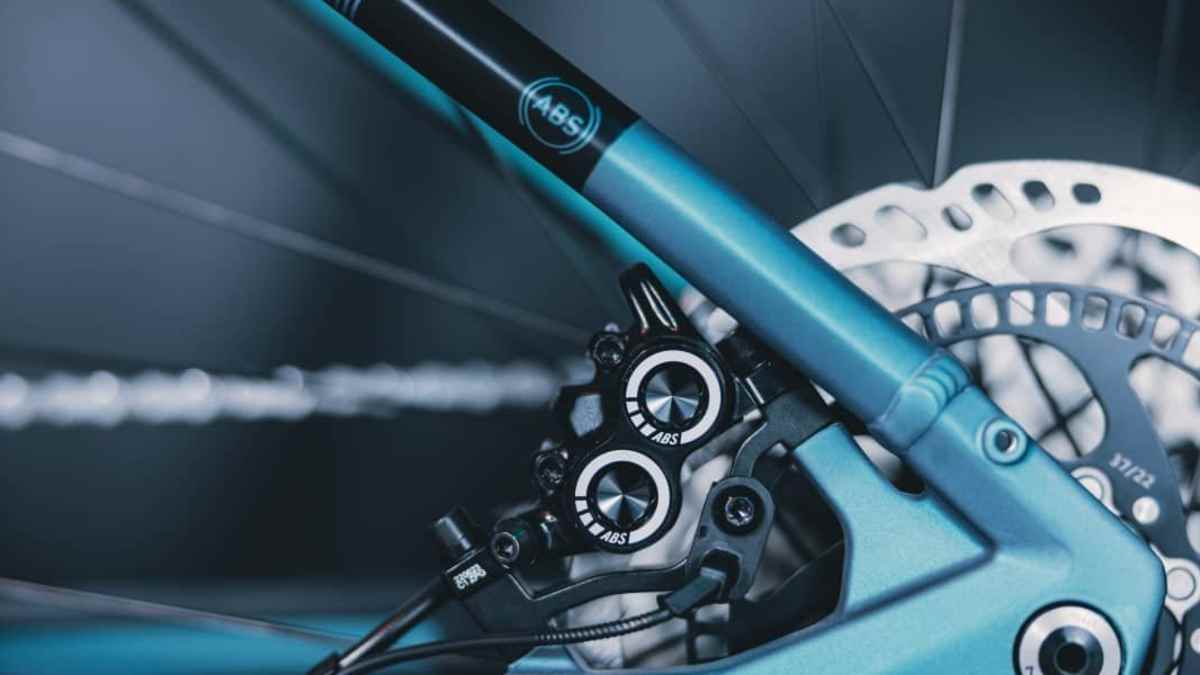
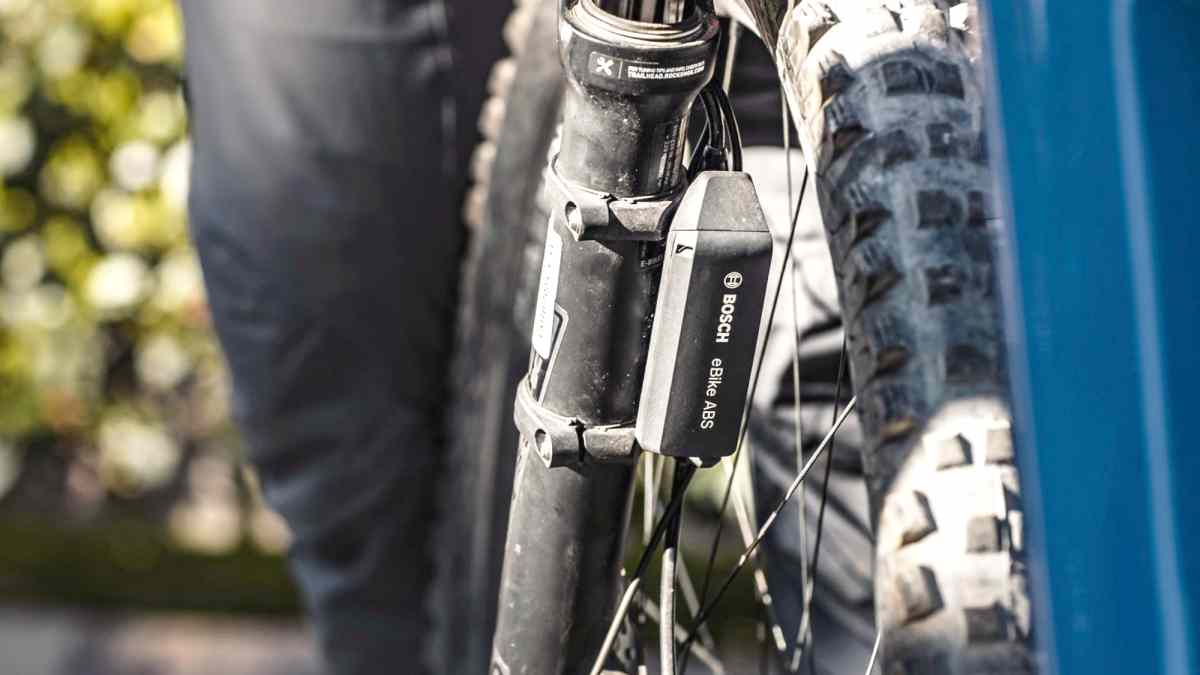
Technically, a bicycle ABS usually consists of:
- Speed sensors on the wheels
- a control unit
- a hydraulic control module
- special software for brake control
Bosch E-Bike ABS Pro: The overview
- Controls only the front wheel (single-channel system)
- Riding modes: Trail Pro and Race
- Can be switched on and off
- No curve detection
- Regulates from a speed of 6 km/h
- Weight of control unit: 227 grams (manufacturer's specification)
- Only available in new bikes, no retrofit option
- Only available for e-bikes
The advantages of ABS in cycling
More safety during emergency braking
The biggest advantage is obvious: the risk of a fall due to locking wheels is significantly reduced. The bike remains more controllable, especially on wet tarmac, gravel or loose surfaces. This is particularly beneficial for novice cyclists who have not mastered controlled braking on loose surfaces.

Better control in the field
When used on trails, ABS can help you to brake in a controlled manner, even on steep sections. Less experienced riders in particular tend to apply the front brake too hard. The system intervenes before the front wheel slips.
Shorter braking distances on difficult surfaces
On loose surfaces, a wheel that locks up can quickly start to slip. ABS tends to keep the tyres in the optimum grip range and can therefore shorten the braking distance.
The disadvantages of bicycle ABS
More weight
The additional technology adds weight to the bike. Sensors, control unit and hydraulic unit make the bike heavier - often a point of criticism for sporty riders.
Higher costs
ABS systems are expensive. Bikes with ABS are often priced significantly higher than comparable models without a system.
More complexity
Where more technology is installed, the maintenance effort also increases. In addition, repairs are usually only possible at a specialist dealer.
Not everyone wants electronic interventions
Experienced mountain bikers often prefer a direct braking feel without electronic assistance. Especially in sporty use, many want to retain full control themselves. Locking the wheels can also be useful in some areas.
What test editor Adrian Kaether says
We were already impressed by the first Trail ABS from 2022. With the ABS Pro, Bosch has significantly improved on the main point of criticism: ABS Pro now delivers braking power en masse, making even very demanding riders happy. In addition, the system also works with normal MTB brakes with sporty ergonomics and still reliably intercepts braking errors. A clear recommendation! -
Adrian Kaether, Editor Test & Technology
Where does it come from? Who invented it?
The basic idea originated at the beginning of the 20th century - originally not for cars, but for railways and aeroplanes. Even back then, the aim was to prevent the wheels from locking when braking so that vehicles could remain controllable.
The French engineer Gabriel Voisin, who developed the first mechanical systems for aeroplanes in the 1920s, is regarded as one of the early developers. However, ABS only became truly practical much later with electronic control technology.
The first production-ready electronic ABS for cars was developed in the late 1960s and early 1970s through a collaboration between Bosch and Mercedes-Benz. In 1978, the system was officially used in series production for the first time - in the Mercedes-Benz S-Class. This is still considered a milestone in vehicle safety today.
In the motorbike sector, BMW Motorrad launched the first standard ABS on the market in 1988. Bicycle ABS, on the other hand, is comparatively young: the first market-ready systems on e-bikes and trekking bikes only came onto the market in the 2010s - also strongly driven by Bosch eBike Systems.
Opinion: What veteran designer Lutz Scheffer says
BIKE: On the one hand you are an opponent of ABS and on the other you are in favour of maximum safety for cyclists. How does that fit together? Anti-lock braking systems protect inexperienced cyclists in particular, who can reach for the brakes unchecked on gravel bends.
LUTZ SCHEFFER: Yes, ABS can prevent sudden braking and rollover accidents - that's a positive thing. It becomes critical when riders rely on it to blast down trails that they couldn't ride before. The rider should be riding within the limits of their ability, not relying on electronics. Also: I don't want ABS to become mandatory in regulation. In short: I'm not demonising ABS, but if bureaucrats were to stipulate that all pedelecs have to have ABS, I'd be deadly unhappy.


Laurin Lehner
Editor