


In this article, we use so-called affiliate links. With every purchase through these links, we receive a commission from the merchant. All relevant referral links are marked with . Learn more.
The gearing determines how efficiently you climb and how smoothly you roll. Our guide shows you whether a simple 1x or a fine-tuned 2x system is ideal for your gravel adventure.
Gravel gears are more robust than road bike gears. True, but that's not all. Gravel biking places fundamentally different demands on a perfectly fitting rear derailleur than road biking - on the one hand in terms of operation, and on the other in terms of range and gradation. And in these respects, gravel biking is not the same as gravel biking. Just as the areas of use and rider profiles differ, so do the requirements for an optimally suited groupset.
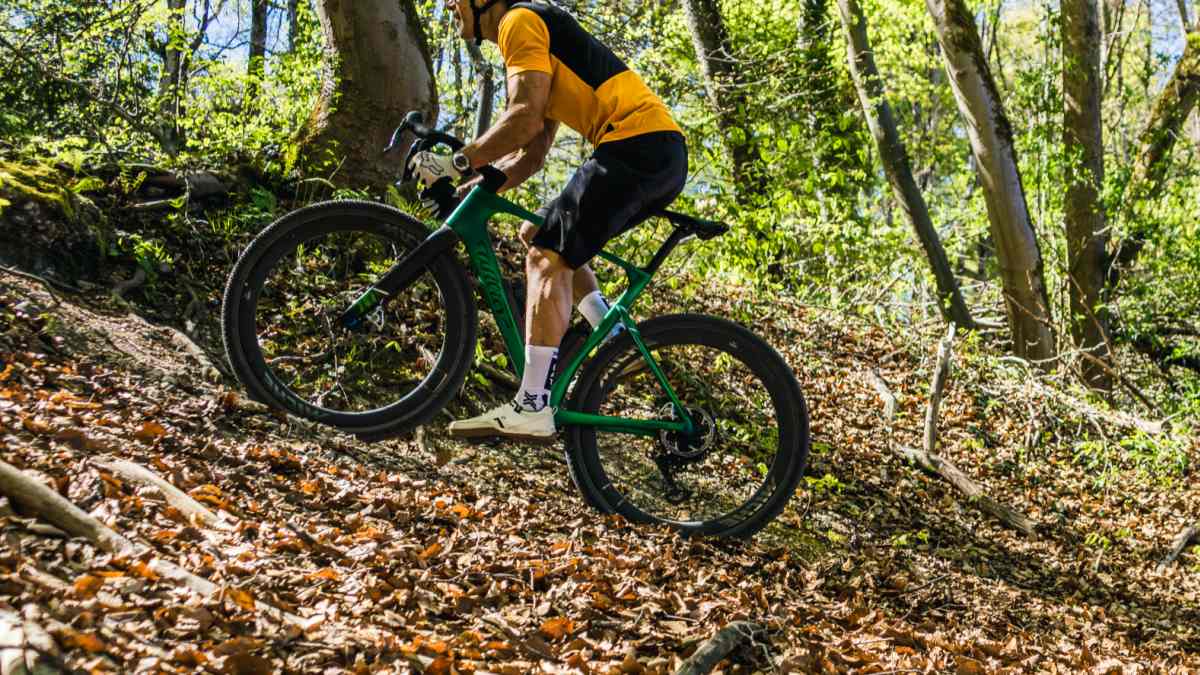
Let's start from the beginning: Road bike components are uncompromisingly optimised for the asphalt. Modern gravel drivetrains, on the other hand, have to master the difficult balancing act between steep, unpaved ramps in the forest and fast passages on the road and also be as intuitive to operate as possible so that the rider has a clear head for the challenges of the terrain. In the end, however, it boils down to a fundamental decision: 1x or 2x chainring, that is the question that needs to be answered.

In order to answer this question in a differentiated manner, let's take a closer look at the options and philosophies of the market leaders Shimano and SRAM. However, the basic advantages and disadvantages of 1x and 2x drivetrains remain the same across all manufacturers.
System comparison: advantages and disadvantages in detail
1-speed systems (1x): Intuitive simplicity for rough terrain
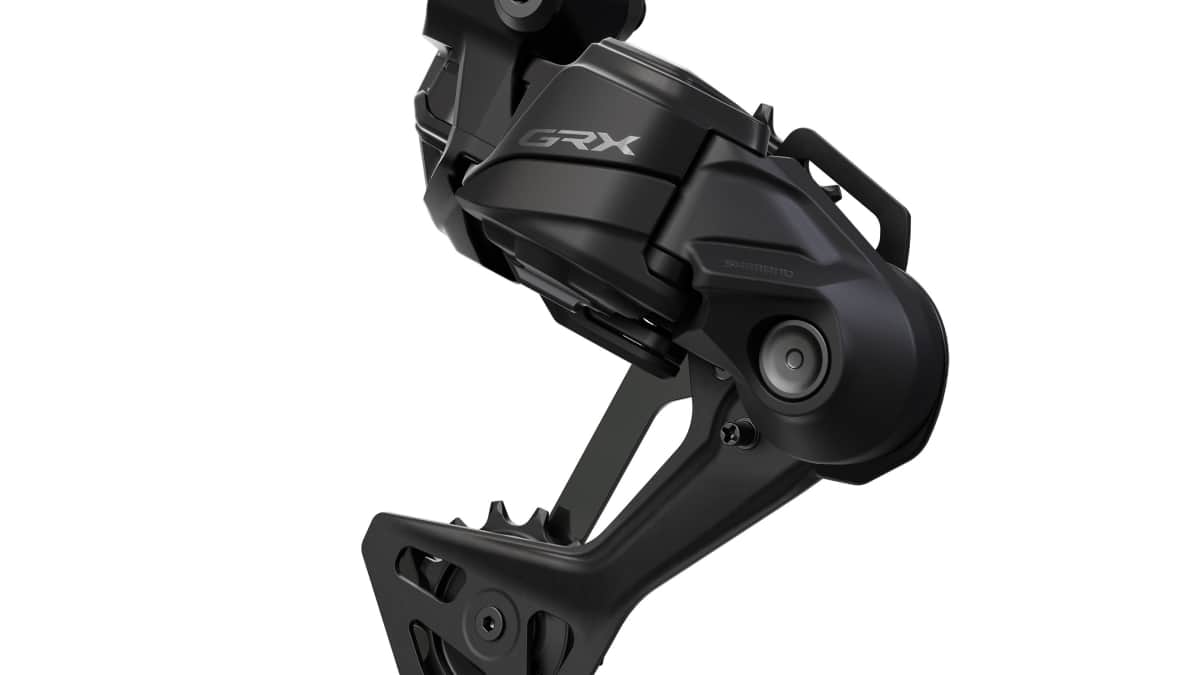
SRAM played a key role in shaping the trend towards drivetrains with just one chainring, but Shimano also followed suit with the GRX series. Today, single-speed drivetrains are an integral part of off-road cycling.
The advantages:
- Fewer sources of error: As no front derailleur, no second chainring and no inner gear lever are required, the risk of mechanical defects or contamination in the mud is drastically reduced.
- Intuitive operation: Shifting becomes extremely simple - there is only "heavier" or "lighter". There is no need to think about diagonal gears or equalising at the front derailleur.
- More tyre clearance: The elimination of the front derailleur creates valuable space in the bottom bracket area. This allows frame designers to shape the chainstays so that even very wide gravel tyres (often up to 50 mm or more) fit easily into the frame.
- Maximum chain safety: Both Shimano's GRX and SRAM's gravel derailleurs have integrated chain stabilisers (so-called clutches/friction clutches), which prevent the chain from bouncing violently on bumpy roads. In combination with special "narrow-wide" chainrings (whose teeth are alternately thick and thin and literally grip the chain), it is more difficult for the chain to jump off in rough terrain.
The disadvantages:
- The gear jumps: In order to realise a mountain-compatible gear ratio without a second chainring, the jumps between the individual sprockets on the cassette must inevitably be larger. If you ride a lot on tarmac or are looking for the exact feel-good cadence (cadence) in a group, you will often have the feeling of being stuck exactly between two gears.
2x systems (2x): Finest gradation for tarmac and touring
While SRAM has focussed almost entirely on 1x, market leader Shimano is still vehemently sticking to the front derailleur option for its GRX series. There are good reasons for this, as the traditional system offers decisive ergonomic advantages, especially over long distances.
The advantages:
- Perfect cadence: Thanks to the two chainrings at the front, the sprockets at the rear can be extremely closely spaced. The gear jumps are minimal. This is ideal for staying in the aerobic, fatigue-free cadence range on long flat stretches, in headwinds or on tarmac sections.
- High overall range with harmonious progression: You combine a high top speed for descents with very light uphill gears, without feeling any "holes" in the shifting process in between.
The disadvantages:
- Greater complexity and maintenance: A front derailleur is susceptible to blockages in mud. There is also an increased risk of the chain dropping when shifting quickly under load off-road.
- Restrictions in the field: The front derailleur often limits the maximum tyre width of the frame and tends to make a louder noise on hard impacts when the chain hits the guide plates.
Optimum configurations: Chainrings and sprocket ratios
Depending on the manufacturer and number of gears, there are now highly efficient combinations that solve the problem of bandwidth in different ways:
The modern 1-fold options (12-fold and 13-fold)
- Shimano GRX 1x12 (Max Range): With a huge 10-51 teeth cassette, Shimano achieves a bandwidth of 510 %. Combined with a 40 mm or 42 mm chainring, you can master even the steepest mountain bike ramps with this cassette, but you have to accept larger gear jumps. For somewhat flatter terrain, Shimano offers the narrower 10-45 cassette.
- SRAM XPLR (1x12 & 1x13): The dedicated gravel groupsets from SRAM offer excellent all-round characteristics. In the latest generation, SRAM switches to the high-end range 13 gears high. With cassettes like the 10-46 (460 % bandwidth) achieves an excellent compromise between climbing ability and still tolerable gear jumps in the medium speed range.
- SRAM Mullet setup (1x12): Here, SRAM's road/gravel shifters are connected wirelessly to a mountain bike rear derailleur (e.g. Eagle AXS) and a 10-52 MTB cassette combined. The result is a very wide range of 520 % - Ideal for the steepest ramps and Alpine crossings, but with noticeable jumps on the road.
The classic 2-speed options (2x11 and 2x12)
- Shimano GRX 2x12: The combination of a crank with 48/31 (or 46/30) teeth and a narrow-stepped 11-34 or 11-36 cassette delivers a bandwidth of around 479 % to 507 %. The highlight: the gears are so close together that the transition is barely noticeable when changing gear.
Perfect match: the gears match the gravel bike categories
The market has become highly specialised, which is why certain drives can be assigned to specific bike categories:
| Gravel bike category | Recommended switching configuration | Properties |
| Race-Gravel | 1x13 SRAM Red XPLR or 2x12 Shimano GRX Di2 | The focus is on aero advantages, low weight and the avoidance of chain loss by dispensing with the front derailleur with SRAM - or on electronically perfect, closely graduated cadence with Shimano's Di2. |
| Adventure / Bikepacking | 1x12 Shimano GRX (10-51) or SRAM Eagle Mullet (10-52) | Robustness and maximum climbing ability are the top priorities. Extreme gear reductions are essential to get a heavily laden bike up steep gravel tracks. |
| Tour / Allround | 2x11 or 2x12 (Shimano GRX mechanical) | These bikes are often used as commuter and leisure bikes. The high proportion of tarmac requires the fine gear gradation of the proven 2x system with front derailleur. |
Costs: High-tech and electronics have their price
If you are thinking about buying a gravel bike, you will soon realise that the choice of drive unit has a major influence on the final price of the bike.
Especially the new 1x13 systems from SRAM are mostly in the hands of the premium segment. If you're looking for the latest wireless radio combined with 13 gears (as with the exclusive SRAM Red XPLR AXS complete group), ends up with complete wheels beyond 4,000 euros. These groupsets use ultra-light carbon and titanium, which reduces the weight but drives up the price. Shimano's top electronic groupset GRX Di2 (RX825) ranks in the upper price segment.
The Mid-range (approx. 1,800 to 3,500 euros) offers the most fiercely contested field. Here, Shimano's mechanical GRX RX600/800 series (both 1x12 and 2x12) and SRAM's highly attractive electronic radio groups Apex AXS, Rival AXS and Force AXS (1x12). With the Apex AXS, SRAM brings electronic wireless technology to surprisingly affordable regions.
In the Entry-level segment (under 1,500 euros) the front derailleur from Shimano is unbeaten: the proven, mechanical Shimano GRX RX400 with its solid 2x10 technology offers an affordable, very durable entry-level option for price-conscious touring riders, while SRAM's mechanical Apex groupset serves the 1-speed entry-level segment.
Conclusion: Which configuration suits you?
There is no one perfect gravel drivetrain - the choice between the two giants Shimano and SRAM depends entirely on your individual preferences and routes.
- Choose a Shimano 2x system (e.g. GRX 2x12) if you... you use your gravel bike as a "one-for-all" bike, ride a lot on tarmac roads, enjoy long tours on undulating terrain or pay meticulous attention to your optimum cadence when commuting and in a group.
- Choose a 1x system (Shimano GRX 1x12 or SRAM XPLR) if you... your focus is clearly on riding fun in real terrain, on single trails, forest tracks and mud. You benefit from maximum chain safety, tyre clearance and wonderfully uncomplicated, intuitive operation.

Josh Welz
Editor-in-Chief
